Table of contents
In the vast and often intimidating landscape of the internet, a tiny, smiling marsupial from a remote Australian island has carved out a surprising and joyful niche. The quokka, a cat-sized relative of the kangaroo, has earned the undisputed title of “the world’s happiest animal,” primarily due to its perpetually cheerful expression that looks tailor-made for viral selfies. But what is the real story behind that endearing grin? Is the quokka truly beaming with joy, or are we, as humans, projecting our emotions onto a fascinating biological adaptation?
This article delves deep into the quokka selfie phenomenon, moving beyond the cute photos to explore the biology, behavior, and ethical considerations surrounding this unique animal. We will unravel the mystery of their smile, introduce you to their island home, and provide a comprehensive guide to responsible quokka encounters.
A. Meet the Quokka: Australia’s Island Treasure
Before we analyze the smile, it’s crucial to understand the animal behind it.
A.1. Biological Classification and Description
Scientifically known as Setonix brachyurus, the quokka is a small macropod (the family that includes kangaroos and wallabies). They are roughly the size of a domestic cat, measuring about 40 to 54 centimeters (16 to 21 inches) in body length, with a short, barely noticeable tail. They have rounded ears, a stout body, and strong hind legs that allow them to hop through their dense habitat. Their fur is a coarse, grizzled brown-grey, providing excellent camouflage in the scrubland they call home.
A.2. Natural Habitat and Distribution
The quokka’s range is extremely limited, making them a vulnerable species. Historically, they were found across the southwestern corner of mainland Australia. However, due to predation by introduced species like foxes and feral cats, and habitat loss, their mainland populations have drastically declined and are now fragmented and endangered.
The vast majority of the quokka population estimated to be between 10,000 and 12,000 individuals thrives on Rottnest Island, a car-free nature reserve located just off the coast of Perth, Western Australia. Smaller, more vulnerable populations exist on Bald Island and in a few protected mainland areas. The absence of red foxes on Rottnest Island has been the single most critical factor in their survival there.
B. Deconstructing the “Smile”: The Science Behind the Grin
This is the core of the quokka’s fame. Why do they look so happy? The answer is a fascinating mix of anatomy, evolutionary biology, and human psychology.
B.1. The Anatomical Truth: It’s Not a Smile of Joy
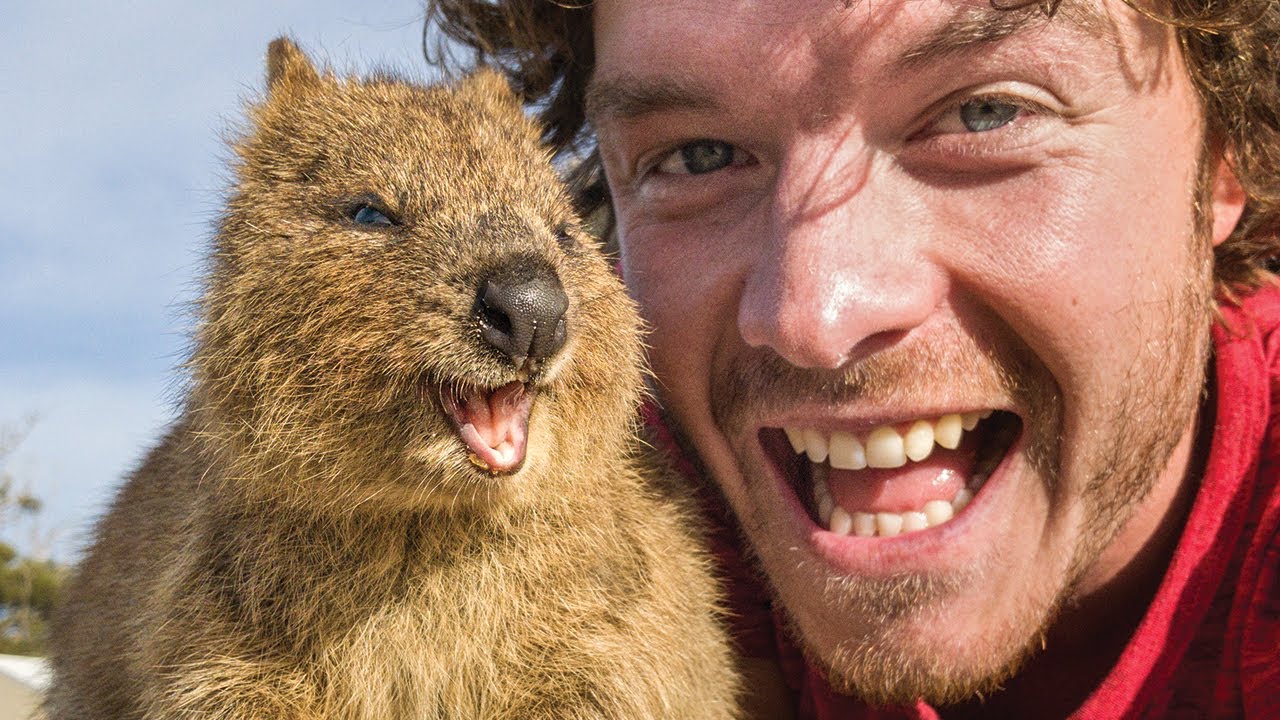
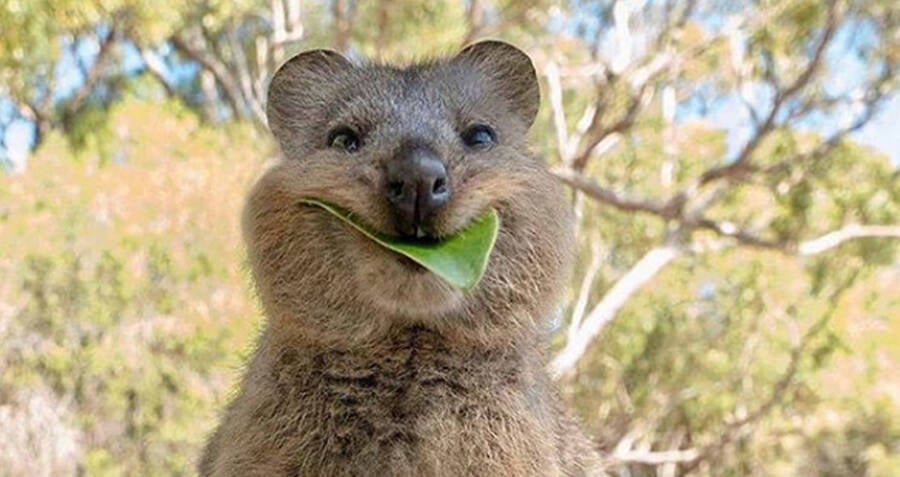
First and foremost, the “smile” is not an expression of happiness as humans understand it. The quokka’s facial structure, characterized by a unique arrangement of muscles and a pronounced maxilla (upper jawbone), naturally curves the corners of its mouth upwards. This is a passive, resting state. When a quokka opens its mouth, the shape can appear even more grin-like, especially when panting to regulate body temperature.
Think of it like the permanent “smile” of a dolphin. It’s a fixed anatomical feature, not a direct reflection of its emotional state. However, this doesn’t make the expression any less charming or real; it simply means we are interpreting a neutral structure through an emotional lens a phenomenon known as anthropomorphism.
B.2. The Role of Anthropomorphism
Anthropomorphism is the human tendency to attribute human characteristics, emotions, and intentions to non-human entities like animals, gods, or even objects. We are hardwired to read faces, and a face that resembles a human smile is almost universally interpreted as friendly, happy, and non-threatening. This innate response is precisely why the quokka has become such an internet sensation. Our brains see the upturned mouth and immediately signal “happy,” creating an irresistible emotional connection.
B.3. When the Smile is a Signal: Communication and Behavior
While the baseline smile is anatomical, quokkas do use their faces and bodies to communicate. Observing them in their social groups reveals a repertoire of behaviors:
- Panting: Often mistaken for a big, happy smile, panting is primarily a cooling mechanism. Rottnest Island can get quite warm, and quokkas, like dogs, pant to evaporate moisture from their tongues and respiratory tract.
- Vocalizations: They are not entirely silent. Quokkas can produce a variety of hisses, grunts, and squeaks, particularly during social interactions or when feeling threatened.
- Body Language: A relaxed quokka will often have a loose posture. If startled or threatened, they may freeze, thump their hind legs on the ground as an alarm signal to others, or rapidly hop away to cover.
C. The Rise of the Quokka Selfie: From Obscurity to Global Stardom
The quokka’s journey to becoming a social media A-lister is a classic case of the right animal in the right place at the right time.
C.1. The Perfect Social Media Storm
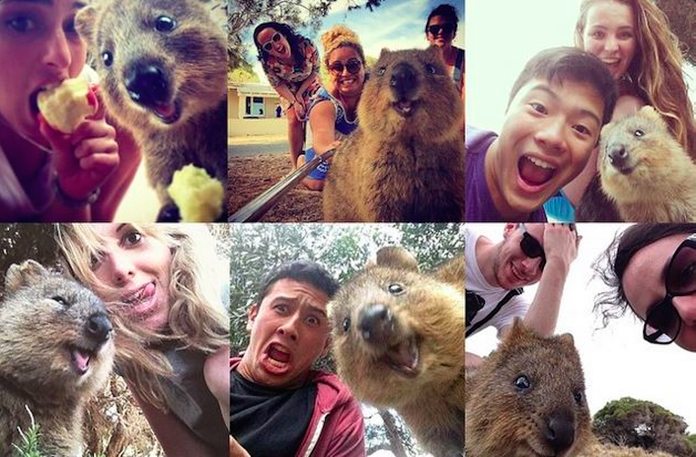
The phenomenon took off in the early 2010s, coinciding with the massive global growth of Instagram. Tourists visiting Rottnest Island, captivated by the quokkas’ fearlessness and photogenic faces, began posting selfies with them. The combination of a unique animal, a beautiful island location, and a seemingly “happy” expression was catnip for the algorithm. The hashtag #quokkaselfie was born and quickly amassed hundreds of thousands of posts.
C.2. Celebrity Endorsement
The trend skyrocketed when international celebrities, including tennis champion Roger Federer and actor Chris Hemsworth, posted their own quokka selfies to their millions of followers. This brought the quokka into the global spotlight, transforming it from an obscure Australian marsupial into a must-see tourist attraction and a bucket-list photo opportunity.
C.3. The “Happiest Animal” Moniker
The media quickly latched onto the story, dubbing the quokka “the world’s happiest animal.” This label, while scientifically informal, was incredibly effective. It encapsulated the animal’s appeal in a simple, shareable phrase and solidified its place in popular culture.
D. A Guide to Ethical Quokka Encounters and Photography
The surge in popularity has been a double-edged sword. While it has raised awareness and boosted tourism, it has also raised significant concerns about the welfare of the quokkas. It is absolutely paramount that any interaction with these wild animals is conducted ethically.
D.1. The Golden Rules of Quokka Selfies
The Rottnest Island Authority has established strict guidelines to protect the quokkas. Following these is not optional; it is essential for their conservation.
- A. Look, Don’t Touch: It is illegal to touch or handle a quokka. Human hands can transfer diseases, oils, and sunscreen that are harmful to them. Furthermore, handling causes them immense stress.
- B. Never Feed Them: Quokkas have a specialized diet of native vegetation, grasses, and leaves. Human food especially bread, chips, and sugary snacks is extremely harmful. It can cause dehydration, malnutrition, and a debilitating jaw disease called “Lumpy Jaw,” which is often fatal.
- C. Let Them Come to You: Crouch down and be patient. A quokka that is curious and unafraid may approach you. If it doesn’t, or if it moves away, respect its space. Do not chase or corner an animal.
- D. Maintain a Safe Distance: Your presence should not alter the animal’s natural behavior. If it stops foraging or looks stressed, you are too close.
- E. The Perfect Shot: The best quokka selfies are taken at their eye level. Hold your camera or phone, and let the quokka investigate. The most magical photos are those where the quokka is naturally inquisitive, not harassed or baited.
D.2. The Dark Side of Fame: Potential Risks to the Quokka
Ignoring the ethical guidelines has real consequences:
- Health Problems: As mentioned, feeding human food leads to severe health issues and degrades their natural foraging skills.
- Habituation and Dependency: Quokkas that become too accustomed to humans may lose their natural wariness, making them vulnerable to threats elsewhere. They should remain wild animals, not semi-domesticated attractions.
- Stress: Constant pursuit by tourists for the perfect photo can cause chronic stress, which impacts their immune system, reproductive success, and overall well-being.
- Habitat Degradation: Increased foot traffic in sensitive areas can damage the very vegetation the quokkas rely on for food and shelter.
E. Beyond the Selfie: The Conservation Status and Efforts
Behind the cheerful facade lies the sobering reality that the quokka is a vulnerable species facing an uncertain future.
E.1. Conservation Status
The quokka is listed as “Vulnerable” on the IUCN Red List of Threatened Species. The primary threats are:
- Predation: On the mainland, foxes and feral cats decimate quokka populations.
- Habitat Loss and Fragmentation: Urban development and land clearing for agriculture have destroyed and isolated their native scrubland.
- Climate Change: Increased frequency and intensity of droughts and bushfires in southwestern Australia threaten their remaining habitats and food sources.
E.2. Conservation Initiatives
Numerous organizations and government bodies are working to ensure the quokka’s survival:
- Fox Control Programs: Intensive baiting and trapping of foxes on the mainland are critical for protecting the remaining populations.
- Habitat Protection and Restoration: Fencing off reserves and replanting native vegetation are key strategies.
- Research and Monitoring: Scientists continuously monitor quokka populations, health, and genetics to inform conservation strategies.
- Public Education: Campaigns by the Rottnest Island Authority and wildlife groups are vital for teaching tourists how to behave responsibly around quokkas.
F. Planning Your Visit to Rottnest Island
If the quokka has captured your heart and you’re planning a pilgrimage to meet one, here’s what you need to know.
F.1. Getting There
Rottnest Island is accessible via a 25-30 minute ferry ride from Fremantle, or a slightly longer trip from Perth’s Barrack Street Jetty or Hillarys Boat Harbour. It’s recommended to book ferry tickets and accommodation well in advance, especially during peak season (Australian summer).
F.2. Getting Around the Island
The island is car-free for the general public. The best ways to explore are:
- Bicycle: The quintessential Rottnest experience. You can hire a bike on the island and cycle the 22-kilometer Wadjemup Bidi, a trail network that loops around the island.
- The Bayseeker Bus: A convenient hop-on, hop-off bus service that stops at all the major bays and attractions.
- Walking: Numerous walking trails allow for a more intimate exploration of the island’s stunning landscapes.
F.3. Best Times for Quokka Spotting
Quokkas are most active during the early morning and late afternoon, avoiding the heat of the day. They are commonly found grazing in grassy areas, near settlements, and around the Thomson Bay settlement where the ferry arrives. Be patient, quiet, and observant, and you will likely be rewarded with a sighting.
G. The Quokka’s Cultural and Ecological Significance
The quokka is more than just a photo opportunity; it holds deep significance.
G.1. Indigenous Heritage
The name “Rottnest” comes from the Dutch for “rat’s nest,” given by early explorers who mistook the quokkas for giant rats. However, the island, known as Wadjemup to the Whadjuk Noongar people, has been a place of spiritual significance for tens of thousands of years. Understanding this deep cultural history adds a profound layer of respect to a visit.
G.2. Keystone Species
As herbivores, quokkas play a vital role in their ecosystem. Through their foraging, they help with seed dispersal and vegetation management, contributing to the health and biodiversity of the scrubland ecosystem.
Conclusion: A Symbol of Joy with a Serious Message
The quokka, with its irresistible and seemingly joyful countenance, has become a global beacon of happiness in a often-stressful world. Its smile, while a quirk of anatomy, has the power to bring joy to millions and draw attention to the unique wildlife of Australia. However, this fame comes with a profound responsibility. The story of the quokka selfie is a powerful reminder that our fascination with nature must be coupled with respect and a commitment to conservation.
The true measure of our love for the “world’s happiest animal” is not in the number of likes our selfie gets, but in the actions we take to ensure its species continues to thrive, smile and all, in its natural island home for generations to come. So, if you are lucky enough to meet a quokka, capture the moment responsibly, cherish the memory, and become an ambassador for its protection.