Table of contents
The bond between humans and animals is one of the most profound and cherished relationships in our lives. Our pets are family members, and when they are sick, distressed, or when we face their loss, the emotional pain can be overwhelming. It is from this wellspring of love and vulnerability that the industry of animal psychics, also known as pet communicators or animal intuitives, has flourished. Promising a bridge across the species divide, these individuals claim to receive telepathic messages, relay feelings, and even make startling predictions about an animal’s health, past, or future. The allure is undeniable: who wouldn’t want to know what their beloved companion is thinking or to receive a final message from a departed pet?
However, when we subject these claims to the rigorous light of critical thinking and scientific scrutiny, the facade quickly crumbles. This article will embark on a detailed exploration of the world of animal psychic predictions, deconstructing the methods used, examining the psychological principles at play, and contrasting these unsubstantiated practices with the established science of animal behavior. Our goal is not to disparage those who seek comfort but to empower them with knowledge, separating emotional hope from demonstrable reality.
The Allure and the Promise: Why We Are Drawn to Animal Psychics
Before debunking the claims, it is crucial to understand why they are so persuasive. The success of animal psychics is not rooted in supernatural ability but in a masterful, albeit often unintentional, exploitation of human psychology.
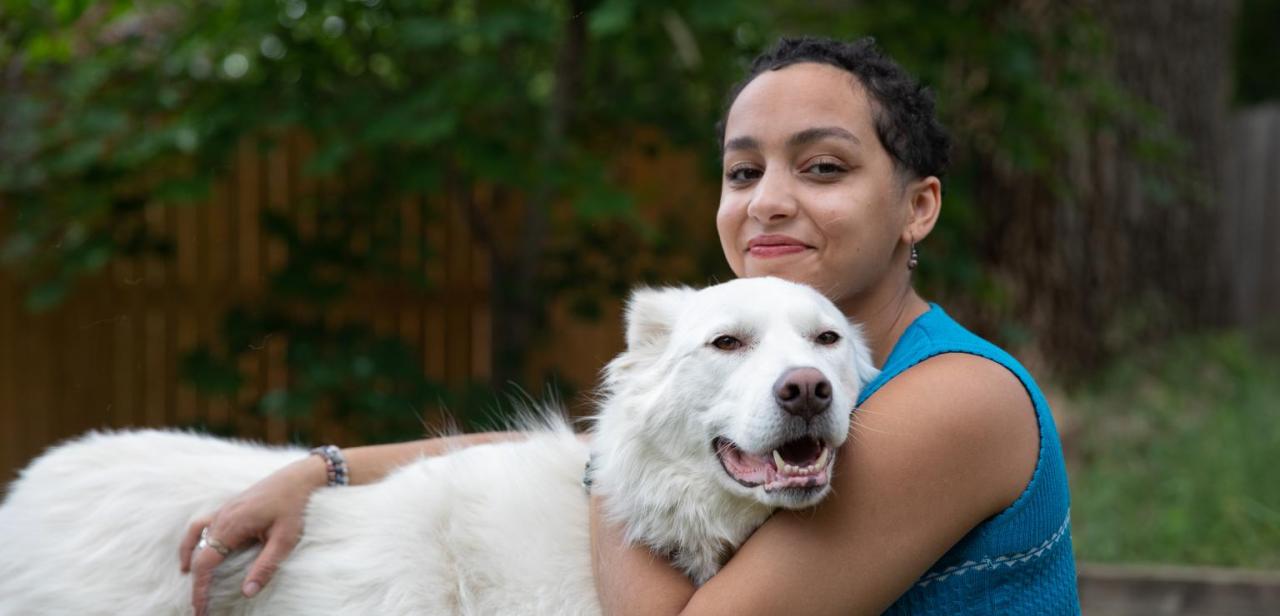
A. The Depth of the Human-Animal Bond: For many people, pets are not animals; they are surrogate children, loyal confidants, and sources of unconditional love. This deep emotional connection creates a powerful desire for deeper understanding and communication, a gap that animal psychics readily claim to fill.
B. Navigating Grief and the Fear of the Unknown: The loss of a pet is a devastating experience. The finality of death is difficult to accept, and the concept of an animal psychic who can “contact” the departed pet offers a tantalizing solace. It provides a narrative, a sense of closure, and a way to manage the intense pain of grief, making individuals highly susceptible to suggestion.
C. The Search for Answers in Times of Crisis: When a pet exhibits puzzling behavioral issues or falls ill with an undiagnosed condition, owners can feel helpless. Traditional veterinary medicine may not always provide immediate, clear answers. In this vacuum of uncertainty, an animal psychic who claims to “see” the problem or predict an outcome presents a seemingly simple and direct solution.
D. The Appeal of the Mystical and Unexplained: Human beings are naturally drawn to mystery and the possibility of powers beyond our current understanding. The idea that some individuals possess a latent ability to communicate with other species taps into a timeless fascination with the paranormal, making the claim feel special and profound, even in the absence of evidence.
The Arsenal of Illusion: Deconstructing the Methods of Animal Psychics
Animal psychics do not rely on telepathy; they rely on a set of well-documented psychological techniques that have been used by stage mentalists and human psychics for over a century. Understanding these tools is the first step toward immunity.
A. Cold Reading: The Art of Fishing for Information
Cold reading is the cornerstone of a psychic’s act. It involves making a high volume of vague, probabilistic statements and carefully observing the client’s verbal and non-verbal reactions to guide subsequent “revelations.”
- The Barnum Effect: This psychological phenomenon refers to our tendency to accept vague, general personality descriptions as uniquely accurate. Statements like, “He has a playful side but can be very stubborn when he wants to be,” or “She’s very loyal to you but sometimes gets anxious when you’re away,” are true for virtually every dog or cat. The client’s brain, seeking confirmation, latches onto these universal truths and attributes specific, personal meaning to them.
- High-Probability Guesses: An animal psychic will often start with very safe assumptions. For a dog, they might say, “I’m seeing a problem with the lower body… maybe the hips or back legs?” Given the prevalence of hip dysplasia and arthritis in many breeds, this is a statistically sound guess. The client’s affirming response (“Yes, he has trouble with his hips!”) then gives the psychic a concrete piece of information to build upon.
- Asking Leading Questions: Instead of stating facts, psychics often phrase guesses as questions, forcing the client to provide the actual information. For example: “Is there something blue near his bed? A toy or a blanket?” The client might then respond, “Oh my god, yes, his favorite blue ball!” The psychic then appears to have discovered this information telepathically, when in reality, the client supplied it.
B. Hot Reading: The Cheat Sheet
While cold reading relies on inference, hot reading involves acquiring information about the client beforehand. In the age of social media, this is easier than ever. A quick search of an owner’s public Instagram or Facebook profile can yield a treasure trove of information: the pet’s name, breed, appearance, favorite toys, past illnesses, and even the names of other pets or family members. Revealing this “privately obtained” information during a session creates a powerful illusion of supernatural knowledge.
C. The Shotgun Approach and Selective Memory
A psychic will make dozens, even hundreds, of statements during a session. Many will be incorrect or miss the mark. However, due to confirmation bias our brain’s tendency to remember hits and forget misses the client will vividly recall the few statements that seemed accurate and dismiss the vast majority that were wrong. The psychic’s success is curated by the client’s own memory.
D. Leveraging Animal Behavior and Common Knowledge
A skilled animal psychic has a good understanding of general animal behavior. They know that many cats are aloof but have a favorite hiding spot, that dogs often don’t like men with hats or beards, and that many pets have experienced some form of dietary issue. By couching this common knowledge in the language of telepathy, they create the illusion of unique insight.

The Crucial Role of the Owner: Unwitting Accomplices in the Illusion
The client is not a passive victim in this process; they are an active, albeit unaware, participant. Several psychological factors ensure their cooperation.
A. The Ideomotor Effect: This is a fascinating psychological phenomenon where a person makes motions unconsciously. When a psychic says, “I’m getting a twitching sensation in his front right paw, is he acknowledging that?” the owner will often look directly at that paw, or the animal, perhaps sensing the owner’s focused attention, might shift its weight or lick a paw. This subtle, unconscious movement is taken as a “yes” from the animal, confirming the psychic’s statement.
B. Subjective Validation: This is the personal acceptance of a statement as true based on one’s subjective feelings and beliefs, rather than objective evidence. The owner wants the communication to be real. This deep-seated desire lowers their critical guard and allows them to interpret ambiguous information as proof of genuine connection.
C. Filling in the Gaps: The human brain is a pattern-making machine. When given a vague statement from a psychic, the owner’s mind will automatically work to fit it into their pet’s narrative. The psychic might say, “He’s showing me water, but not a bowl… like a pond or a stream.” The owner will then rifle through their memories until they recall that one time two years ago when they took their dog to a lake. The connection is forged not by the psychic, but by the client’s own cognitive labor.
The Scientific Verdict: Why Telepathy Fails the Test
The central claim of animal psychics telepathic communication exists in a realm that has been thoroughly investigated by science. The consensus is unequivocal.
A. The Lack of a Plausible Mechanism: Science has a detailed, though incomplete, understanding of how communication works, from vocal cords and sound waves to neurotransmitters and brain activity. There is no known biological mechanism, no organ, no energy field, and no physical process that can explain how complex, abstract thoughts could be transmitted from one brain to another, let alone across species boundaries, independent of distance or language.
B. The Failure in Controlled Settings: When animal psychics have been subjected to proper double-blind, controlled experiments, their abilities vanish. In these tests, the psychic is separated from the animal and its owner. They are not allowed to ask questions or receive feedback. They may be shown photographs of animals and asked to describe their personalities, or living animals and asked to identify a problem. In every documented case, the psychics perform no better than random chance. Their success is entirely dependent on the interactive feedback loop with the human owner, which is precisely what cold reading requires.
C. The Problem of Anecdotal Evidence: The primary “evidence” for animal communication is anecdotal: “The psychic knew things she couldn’t possibly have known!” However, anecdotes are not data. They are isolated stories, subject to all the biases and flaws in perception and memory described above. Science relies on reproducible, controlled experiments that can be verified by independent researchers, a standard that animal psychics have consistently failed to meet for decades.
The Ethical Dilemma: Beyond Harmless Comfort
While some argue that if it brings comfort, it’s harmless, this perspective overlooks several significant potential harms.
A. Financial Exploitation of the Vulnerable: Grieving pet owners are among the most vulnerable individuals. Animal psychics can charge substantial sums for their services, often hundreds of dollars for a single session. This constitutes the monetization of grief and hope, extracting money from people at their most emotionally fragile state.
B. Delaying or Replacing legitimate Veterinary Care: This is the most dangerous consequence. A psychic’s “diagnosis” or “prediction” about an animal’s health can lead an owner to forgo or delay essential veterinary treatment. An owner might be told, “He’s just sad, not sick,” or “The energy in his liver will clear up on its own,” while the animal suffers from a serious, treatable medical condition. This can lead to unnecessary pain, suffering, and even death.
C. Creating Misguided Guilt or Anxiety: Psychics often invent narratives to explain behavior. They might claim a rescued dog is acting out because of “past trauma with a man in a uniform,” which can create a lasting and perhaps unfounded fear in the owner. Alternatively, they might imply that an animal’s illness is somehow linked to the owner’s emotional state, burdening the grieving owner with misplaced guilt.
D. Undermining the Genuine Science of Animal Behavior: The work of certified animal behaviorists, veterinary neurologists, and ethologists is grounded in rigorous observation, neurology, and pharmacology. The popularity of psychics trivializes this complex scientific field, suggesting that a “gifted intuitive” can provide answers that elude years of dedicated study and research.
A. The Superior, Science-Based Path to Understanding Your Pet
If you seek to truly understand your animal companion, there are effective, evidence-based approaches that yield real results.
A. Consult a Certified Applied Animal Behaviorist (CAAB) or Veterinary Behaviorist: These are professionals with advanced degrees (Masters, Ph.D., or DVM) in animal behavior. They use scientific principles to diagnose and treat behavioral problems, from aggression and anxiety to compulsive disorders. Their methods are tested, measurable, and effective.
B. Strengthen Your Own Observational Skills: You know your pet better than anyone. Learn the subtleties of their body language. A twitch of the ear, the position of the tail, the dilation of the pupils, and the set of the whiskers all convey a wealth of information. Resources from reputable animal welfare organizations and behaviorists can teach you to become a better observer and interpreter of your pet’s natural communication.
C. Prioritize Comprehensive Veterinary Care: Many behavioral issues have underlying medical causes. Pain, thyroid problems, neurological disorders, and other illnesses can manifest as changes in behavior. A full veterinary workup is the essential first step in addressing any sudden or unexplained change in your pet’s demeanor.
D. Practice Evidence-Based Enrichment and Training: Use positive reinforcement training methods, which are backed by decades of behavioral science. Provide environmental enrichment puzzle toys, foraging opportunities, safe outdoor experiences that cater to your pet’s natural instincts. A mentally and physically stimulated animal is a happier, healthier, and better-understood animal.
Conclusion: Embracing Reality Over Reassuring Fiction
The desire to connect with our animal companions on a deeper level is a beautiful and natural extension of the love we feel for them. The promises of animal psychics tap directly into this profound human yearning. However, when we peel back the layers, we find not a mystical bridge between species, but a carefully crafted illusion built on psychological manipulation, vague statements, and the exploitation of hope and grief.
Choosing science over psychic fiction is not a cold or unfeeling choice. On the contrary, it is an act of profound respect for the animals we love. It means seeking real solutions for their health and well-being, trusting in the observable truths of their behavior, and honoring their memory with genuine grief rather than manufactured narratives. The real, tangible bond you share with your pet forged through daily care, mutual understanding, and observed behavior is more magical and meaningful than any unverifiable prediction could ever be. By grounding ourselves in reality, we ensure that our actions are always in the best, and safest, interest of our beloved animal friends.