
Table of contents
In the vast, whimsical universe of internet content, few things capture the collective human heart quite like a video of a dog howling along to music. From a Siberian Husky belting out a soulful rendition of a pop ballad to a tiny Beagle attempting to match the pitch of a harmonica, these clips are guaranteed gold mines of virality. We laugh, we share, we comment with crying-laughing emojis. But have you ever paused mid-chuckle to wonder what is truly happening in that canine mind? Is your dog simply making a funny noise, or are you witnessing the echoes of a deep, primal form of communication, a bridge between the domestic world and the wild?
The phenomenon of the “singing dog” is far more than a cute party trick. It is a complex behavior rooted in evolutionary biology, canine psychology, and the unique bond they share with humans. This article delves deep into the symphony of the howl, unraveling the mysteries behind why dogs do it, what it means, and how you can better understand and perhaps even participate in this ancient musical dialogue with your four-legged friend.
A. The Primal Echo: Unpacking the Evolutionary Roots of the Howl
To understand why your Labrador starts wailing when you play the piano, we must first journey back in time, long before the era of dog treats and fluffy beds. The modern dog, Canis lupus familiaris, is a direct descendant of the gray wolf, Canis lupus. For wolves, the howl is not a mere vocalization; it is a sophisticated, long-distance communication system vital for survival.
A. Long-Distance Communication: In the dense forest or across sprawling plains, a wolf pack can become scattered during a hunt. The howl acts as an acoustic GPS. A single, sustained howl can travel for miles, allowing separated members to locate one another and regroup. The unique harmonics and modulations in each howl can even convey information about the howler’s identity, location, and status.
B. Territorial Declaration: A group howl is a powerful, auditory “No Trespassing” sign. By projecting their collective voice, a pack advertises its presence and strength, warning rival packs to stay away from their territory. This communal vocalization reinforces social bonds and presents a unified front to potential threats.
C. Social Cohesion and Bonding: Howling strengthens the social fabric of the pack. A group howling session, often initiated by the alpha, is a chorus of unity. It synchronizes the pack’s mood and energy, much like a national anthem or a team chant before a big game. It reaffirms their identity as a cohesive family unit.
When your dog hears a siren or a specific musical note and feels compelled to howl, they are tapping into this deep-seated ancestral memory. They aren’t confused; they are responding to a sound that, in their genetic wiring, mimics the long, sustained pitch of a fellow pack member’s call. Your living room becomes their territory, and you, their human family, are their pack.
B. The Modern Canine Crooner: Why Does My Dog “Sing” to Music?
While the evolutionary impulse is the primary driver, the reasons a specific dog will “sing” along to your guitar or a favorite TV show theme are wonderfully varied. It’s a blend of instinct, environment, and individual personality.
A. Acoustic Trigger: The Right Pitch and Frequency. Dogs have exceptionally sensitive hearing, capable of detecting frequencies far beyond the human range. High-pitched, sustained sounds are the most common triggers. This is why sirens, flute music, harmonicas, and even the high notes of an opera singer are so effective. These sounds closely resemble the fundamental frequency of a natural wolf howl, acting as an irresistible auditory cue for your dog to respond.
B. An Expression of Emotion. Dogs are emotional creatures. Howling can be an outlet for a variety of feelings:
* Joy and Excitement: Your dog may howl when you come home or during a playful session because they are overflowing with positive emotion. It’s their version of singing for joy.
* Anxiety or Stress: Separation anxiety is a common cause of howling. A dog left alone may howl as a distress call, a lonely attempt to reconnect with their missing pack (you).
* Attention-Seeking: If howling results in a laugh, a pet, or even a reprimand, a clever dog quickly learns that this behavior garners attention. Positive reinforcement, even in the form of laughter, can encourage the behavior to continue.
C. A Form of Social Contagion. Just as yawning can be contagious among humans, howling can be socially contagious among canines. When one dog in the neighborhood starts howling, it often sets off a chain reaction. Your dog is essentially answering the “call” of others, participating in a sprawling, suburban pack chorus. This also extends to you. When you sing or play an instrument, your dog may perceive it as your version of a howl and feel compelled to join in, strengthening your social bond.
D. Breed Predispositions. While any dog can howl, certain breeds are far more vocally inclined due to their lineage and historical roles. Breeds with strong genetic ties to wolves or those bred for hunting and tracking using their voices are the most likely “singers.”
* Siberian Huskies and Alaskan Malamutes: Bred as sled dogs in harsh environments, these breeds rely heavily on vocal communication to coordinate with their teams and handlers over long distances. Their dramatic, talkative nature is legendary.
* Hounds: Beagles, Bloodhounds, and Coonhounds were bred for “baying” a specific type of howl used to signal to hunters that they have tracked their quarry. This makes them naturally responsive to compelling sounds.
* Northern Breeds: Samoyeds, American Eskimo Dogs, and Shiba Inus also retain strong vocal traits from their spitz-type ancestors.
C. The Anatomy of a Howl: What Happens Physically?
The iconic sound of a howl is produced by a fascinating coordination of a dog’s anatomy. Unlike a bark, which is a short, explosive burst of sound, a howl is a sustained, modulated tone.
A. The Larynx (Voice Box): The journey of the howl begins here. When a dog decides to howl, the muscles in the larynx adjust the tension of the vocal cords. For a sustained note, the cords are held in a specific position as air is pushed from the lungs through them, causing them to vibrate.
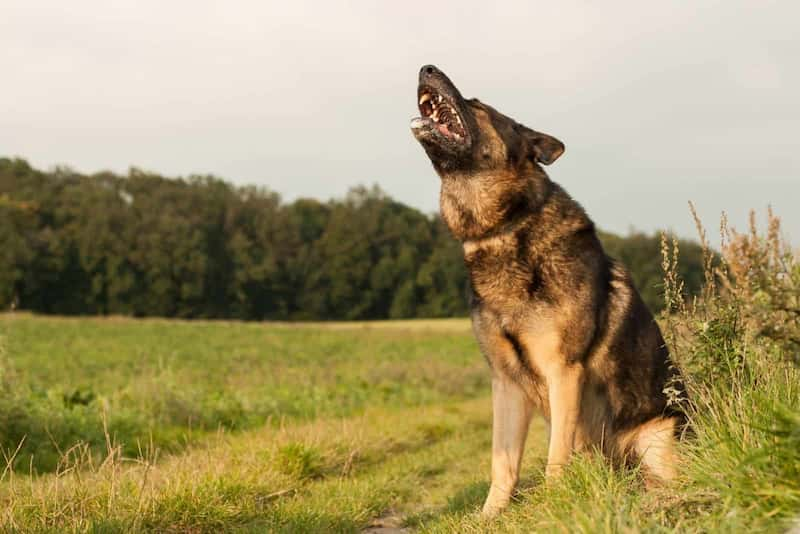
B. The Mouth and Muzzle: The shape of a dog’s muzzle plays a crucial role in the timbre and projection of the howl. As the sound is generated in the larynx, it travels up and out through the mouth. A dog will typically tilt its head back, elongating its vocal tract. This posture is not just for drama; it straightens the airway, allowing for a clearer, more resonant, and far-reaching sound exactly what is needed for long-distance communication.
C. The Unique “Canine Signature”: Just as every human has a unique voice, every dog’s howl is distinct. Factors like the size and shape of the larynx, the length of the muzzle, and the dog’s overall size contribute to the pitch, tone, and duration of their howl. A Beagle’s bay is recognizably different from a Husky’s soulful serenade.

D. Beyond the Howl: Other Musical Canine Behaviors
Howling is the most dramatic musical response, but dogs interact with music and sound in other subtle ways.
A. The Head Tilt: That adorable, quizzical head tilt when music plays is a subject of much speculation. The leading theory is that it’s an attempt to better localize and understand the sound. By moving their head and altering the position of their ear flaps (pinnae), they can triangulate the source of the noise and adjust their hearing to decipher its meaning. They might also be trying to read our facial expressions for cues about this strange, non-threatening sound.
B. Whining and Whimpering to Music: Some dogs don’t full-on howl but instead whine or whimper when certain songs play. This could indicate that the music is eliciting a strong emotional response, perhaps even one of mild anxiety or confusion, rather than an instinct to join in.
C. Calming and Relaxation: On the flip side, numerous studies have shown that specific types of music can have a calming effect on dogs. Classical music, particularly pieces with slow, simple arrangements and long, sustained notes (like those of Beethoven or Mozart), has been proven to reduce stress in kenneled dogs, leading to less barking and more resting. This is the foundation for the growing industry of “dog music” designed for canine relaxation.
E. The Human-Canine Duet: Should You Encourage Your Dog to Sing?
Engaging with your dog’s musical side can be a wonderful way to bond, but it’s important to do so responsibly.
A. How to Encourage Singing Safely:
* Find Their Trigger: Experiment with different instruments and genres. A piano, a harmonica, or even your own singing voice might be the key.
* Positive Reinforcement: When your dog howls along, reward them with a treat, praise, or a pet. This turns it into a positive, shared activity.
* Keep Sessions Short: A minute or two is plenty. You don’t want to overstimulate your dog or let the behavior become a nuisance.
B. When to Be Cautious:
* Signs of Distress: If your dog’s howling is accompanied by pacing, panting, hiding, or a tucked tail, they are likely anxious, not happy. In this case, stop the music and comfort them.
* Nuisance Howling: Be mindful of your neighbors and your own sanity. If the howling becomes excessive or occurs at inappropriate times (like 3 AM), it’s time to manage the behavior.
* Underlying Issues: Constant, compulsive howling, especially when you’re away, can be a sign of separation anxiety. If this is the case, consulting a veterinarian or a certified animal behaviorist is recommended.
F. From Living Room to Limelight: The Making of a Viral Singing Dog Sensation
The internet has transformed the simple joy of a howling dog into a global phenomenon. But what separates a cute home video from a viral mega-hit?
A. The “Aww” Factor and Relatability: The most successful videos tap into universal emotions. We see our own dogs in these viral sensations. The combination of an expressive dog, a recognizable song, and the sheer absurdity of the situation creates a perfect storm of shareability.
B. Production Quality: While a shaky phone video can still be a hit, clips with better lighting, clearer audio, and stable camera work tend to have more staying power. They are easier and more pleasant to watch repeatedly.
C. The Element of Surprise: A Chihuahua hitting a perfect high note or a Great Dane with a surprisingly deep, resonant howl provides the unexpected twist that viewers love.
D. The Narrative: Videos that tell a mini-story are more engaging. The setup (owner starts playing music), the anticipation (dog’s ears perk up), and the payoff (the glorious howl) create a satisfying narrative arc in under a minute.

G. Beyond Virality: The Scientific and Therapeutic Implications
The fascination with singing dogs isn’t just for laughs; it has serious scientific and therapeutic applications.
A. Canine Cognition Research: Studying why and how dogs respond to music gives researchers deeper insights into canine auditory processing, emotional intelligence, and social behavior. It helps us understand how they perceive our world.
B. Music Therapy for Animals: Building on the research that shows music can calm dogs, animal shelters and veterinary clinics are increasingly using specially composed music to reduce stress and anxiety in their canine patients, improving their welfare and potentially increasing adoption rates.
C. Strengthening the Human-Animal Bond: The shared experience of “making music” together, even in this rudimentary form, is a powerful bonding activity. It’s a moment of cross-species connection that reinforces trust and mutual affection.
In conclusion, the next time your furry friend throws back their head and lets out a soulful howl to your favorite tune, remember that you are not just witnessing a random act of noise. You are privy to a profound display of evolutionary heritage, emotional expression, and social connection. It is a melody that stretches back through millennia, a song of the pack, now adapted to include you. So, go ahead, cue up that piano piece, and enjoy the duet. You are making music with a living piece of history.