Table of contents
For centuries, the discovery of a new species has been the stuff of scientific legend. It conjures images of intrepid explorers in pith helmets, hacking through untamed jungles, their eyes peeled for a flash of unknown color or an unfamiliar call echoing through the canopy. This romantic vision, while powerful, is no longer the sole frontier of biological discovery. A new, silent, and incredibly powerful partner has entered the field, one that processes information not with a magnifying glass, but with algorithms: Artificial Intelligence.
The task of cataloging Earth’s biodiversity is a race against time. With habitats disappearing at an alarming rate and an estimated 80-90% of species still undiscovered, traditional methods are no longer sufficient. Enter AI. This technological force is not just assisting biologists; it is fundamentally rewriting the rules of discovery, accelerating the process from a slow, meticulous craft into a high-throughput, data-driven science. This article delves into the multifaceted ways AI is uncovering nature’s hidden secrets, the profound implications for our understanding of life on Earth, and the exciting, collaborative future it heralds.
The Biodiversity Crisis: Why We Need a New Discovery Engine
Before understanding the solution, one must grasp the scale of the problem. Scientists estimate our planet is home to anywhere between 8.7 million to a staggering 1 trillion different species. To date, we have formally described only about 1.5 million. This means we are likely aware of less than 20% of the life forms we share our planet with. Meanwhile, the Holocene extinction event, driven predominantly by human activity, is causing species to vanish before we even know they existed. The traditional model of species discovery relying on field collection, morphological comparison, and expert taxonomic analysis is simply too slow. It is a bottleneck that AI is uniquely positioned to unclog.
The AI Toolkit: A Multitude of Methods for Unmasking Hidden Species
Artificial Intelligence is not a single tool but a diverse suite of technologies. In the context of species discovery, several key branches of AI are proving to be revolutionary.
A. Genomic Pioneers: Decoding the Blueprint of Life
The most profound impact of AI has been in the analysis of genomic data. The cost of DNA sequencing has plummeted, generating an avalanche of genetic information. AI, particularly machine learning, is the only tool capable of sifting through these massive datasets.
- DNA Barcoding and Sequence Analysis: Scientists use short, standardized genetic markers (like the CO1 gene in animals) as a “barcode” to identify species. AI algorithms can compare millions of these barcode sequences against existing databases, instantly flagging sequences that are significantly different. These outliers represent potential new species. Machine learning models can be trained to recognize subtle patterns in the genetic code that are invisible to the human eye, distinguishing between cryptic species organisms that look identical but are genetically distinct.
- Metagenomics: This involves sequencing all the DNA from an environmental sample a scoop of soil, a liter of seawater, or a filter from an air sampler. This single sample contains a chaotic mix of genetic material from thousands of organisms. AI-powered bioinformatics tools are essential to deconstruct this “genomic soup,” assembling the fragments, binning them into putative genomes, and comparing them to known references. This method allows scientists to discover microbes, fungi, and even small invertebrates without ever seeing them.
B. The Auditory Revolution: Listening for the Unheard
Many species, particularly in dense ecosystems, are heard rather than seen. AI is giving scientists superhuman hearing.
- Acoustic Monitoring and Pattern Recognition: Researchers deploy autonomous recording units (ARUs) in forests, oceans, and grasslands, collecting thousands of hours of audio. Manually analyzing these recordings is impossible. AI models, especially those using convolutional neural networks (CNNs) a type of deep learning can be trained to identify specific animal calls, from frog croaks and insect chirps to bird songs and mammal vocalizations.
- Anomaly Detection: The most exciting application is not just identification, but anomaly detection. AI can be programmed to flag vocalizations that do not match any known pattern in its library. This “unknown” signal is a prime candidate for a new species. This technique was used to help identify a new species of orangutan and is constantly revealing new species of frogs and insects in biodiverse hotspots.
C. The Visual Detective: Scanning for the Unseen
Computer vision, the field of AI that enables computers to interpret visual data, is transforming image-based discovery.
- Camera Trap Image Analysis: Millions of camera trap images are captured daily. AI can process these images at lightning speed, identifying species, counting individuals, and noting behaviors. More importantly, it can flag an individual that doesn’t fit the known morphological profile of any local species, prompting further investigation.
- Analysis of Historical and Digital Archives: Vast digital repositories exist, from museum specimen photos on platforms like iNaturalist to satellite imagery. AI can scan these collections, identifying misclassified specimens or spotting tiny, previously overlooked organisms in high-resolution images. It can also analyze subtle phenotypic traits—wing patterns, shell shapes, leaf venation—with a precision and consistency unmatched by humans.
D. The Chemical Sniffer: Identifying Life by its Molecular Signature
Every organism has a unique chemical signature. Portable mass spectrometers can now analyze the chemical compounds in a sample in the field, a technique known as metabolomics. AI algorithms can analyze these complex chemical profiles, learning to distinguish between species based on their unique “chemical barcode.” This is particularly useful for identifying new species of plants, fungi, and bacteria.
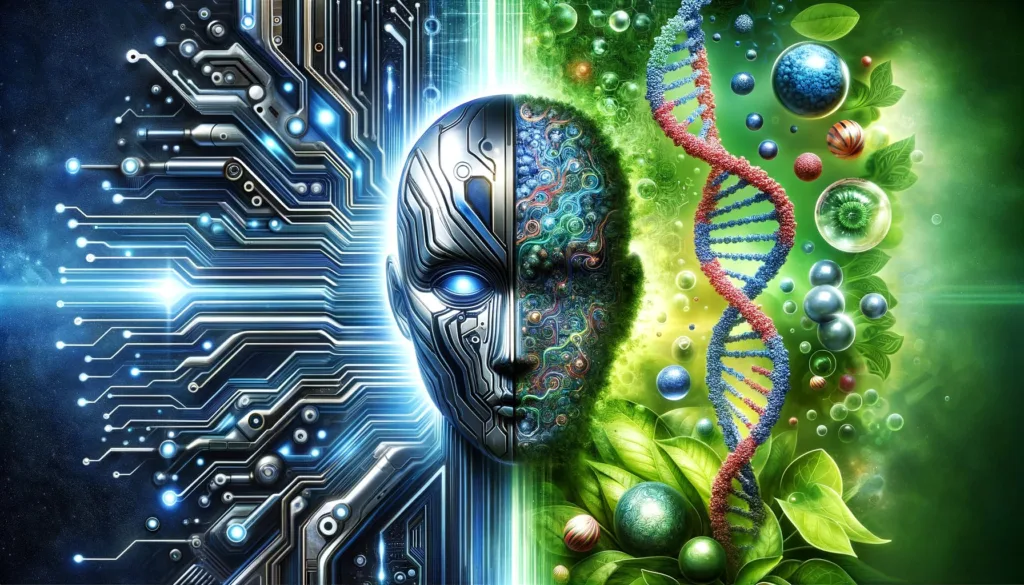
Case Studies in Silicon-Powered Discovery
The theory is compelling, but real-world examples cement AI’s role as a transformative tool.
- The Antarctic Seafood Scandal: In a landmark study, AI was used to analyze DNA from fish samples sold in markets and restaurants around the world. The algorithm compared the DNA barcodes against a global database. The results were shocking: it uncovered widespread mislabeling, with cheaper fish being sold as premium species. But more importantly, in the process, it identified several genetic sequences that did not match any known species, revealing that new, undocumented fish were already being caught and sold. This demonstrates AI’s power not just in pristine wilderness but in the complex web of human commerce.
- The Hidden Skyfolk of Papua New Guinea: In the cloud forests of Papua New Guinea, researchers used audiomoths (small, programmable acoustic sensors) to record the dawn chorus. The recordings were so dense with sound that human analysis was futile. An AI model was trained to filter out known species. What remained were unique, previously unclassified vocalizations. By cross-referencing the location and acoustic signature with field observations, scientists were able to confirm these calls belonged to new species of birds and frogs that had eluded detection for generations.
- The Deep-Sea Microbiome: The deep ocean is the planet’s final frontier. During voyages to map the seafloor, scientists collected water samples teeming with microbial life. Using metagenomic sequencing and powerful AI algorithms, they were able to reconstruct thousands of microbial genomes from these samples. A significant percentage of these genomes were so genetically distinct from anything in existing databases that they represented not just new species, but entirely new branches on the tree of life, potentially new phyla or even domains.
The Human-AI Symbiosis: Augmenting, Not Replacing, the Biologist
A common fear is that AI will render the human scientist obsolete. The opposite is true. AI is a force multiplier, an incredibly efficient research assistant that handles the tedious, data-intensive work, freeing up human experts for what they do best: critical thinking, hypothesis generation, and deep analysis.
- From Needle in a Haystack to a Shortlist of Candidates: AI doesn’t typically declare, “I have found a new species.” Instead, it presents a human researcher with a shortlist of high-probability candidates: a genetic sequence with 15% divergence, an anomalous frog call, a camera trap image of an unusual feline. The taxonomist then uses their expertise to perform the rigorous morphological and genetic work required for formal species description. AI narrows the search from a continent to a specific tree.
- The Expert in the Loop: The most effective systems use a “human-in-the-loop” model. The AI makes a preliminary classification, and when its confidence is low (i.e., it encounters something novel), it flags it for human review. This continuous feedback loop also helps the AI learn and improve its accuracy over time.
Challenges and Ethical Considerations on the New Frontier
As with any powerful technology, the use of AI in species discovery comes with its own set of challenges and ethical dilemmas.
A. The Data Dilemma: Garbage In, Garbage Out
AI models are only as good as the data they are trained on. If the training datasets are biased for instance, containing mostly data from North America and Europe the AI will perform poorly when analyzing species from the Amazon or Southeast Asia. Building comprehensive, globally representative datasets is a monumental but necessary task.
B. The “Black Box” Problem
Many advanced AI models, particularly deep learning networks, are often “black boxes.” We can see the input (a DNA sequence) and the output (a prediction of novelty), but the internal reasoning process is opaque. For science, which relies on verifiable evidence and understanding, this can be problematic. Efforts are underway to develop “explainable AI” that can articulate why it made a certain classification.
C. The Taxonomic Verification Bottleneck
AI can identify potential new species faster than the global community of taxonomists can formally describe them. This could create a new kind of backlog, with thousands of “AI-discovered” species waiting in a digital purgatory for formal recognition.
D. Conservation and Access Ethics
The discovery of a new species, especially a charismatic one, can be a double-edged sword. It can lead to immediate conservation efforts, but it can also attract poachers, unscrupulous collectors, or corporate bioprospectors. There are critical questions about data ownership and access: who owns the genetic data from a sample collected in a developing country? How can we ensure that the benefits of discovery, such as potential new medicines, are shared equitably with the source nation?
The Future is Collaborative: A Glimpse into the Next Decade
The trajectory is clear: AI will become an ever more deeply integrated partner in biological research. We can anticipate several future developments:
- Multimodal AI: Future systems will not rely on a single data type. They will combine genomics, acoustics, imagery, and environmental data simultaneously to make a holistic assessment of a potential new species, dramatically increasing confidence.
- Predictive Ecology: AI will not only discover what is but predict what could be. By analyzing climate, soil, topography, and known species distributions, AI models will generate maps predicting where undiscovered species are most likely to be found, guiding conservation and exploration efforts with unprecedented precision.
- Real-Time Discovery Networks: Imagine a global network of smart sensors acoustic, visual, and environmental streaming data continuously to a central AI. This system could detect and flag a potential new species in near real-time, creating a living, breathing, constantly updating inventory of planetary biodiversity.
- Automated Taxonomy: The final step of writing a formal species description is still a human-centric, text-based process. In the future, AI may assist in generating the initial drafts of taxonomic descriptions, complete with comparative analyses and standardized terminology, which a human taxonomist would then refine and validate.
Conclusion: A New Chapter in Our Relationship with Nature
The discovery of a new species is more than just adding an entry to a catalog. It is a fundamental act of understanding our planet and our place within its intricate web of life. Each new discovery holds potential clues for medicine, agriculture, materials science, and our understanding of evolution and resilience.
Artificial Intelligence is the catalyst for a new golden age of discovery. It is not replacing the sense of wonder that has driven naturalists for centuries; it is amplifying it. By handing over the tedious task of sifting through mountains of data to our algorithmic partners, we are freeing the human spirit to engage in deeper, more meaningful exploration. We are moving from an era of chance encounters to one of intelligent, targeted search. In this powerful collaboration between human curiosity and machine intelligence, we are finally equipping ourselves with the tools needed to listen to, see, and understand the millions of silent, unseen voices that share our world, before they are lost forever. The jungle is still vast, but now, we have a new guide.