Table of contents
The biological trajectory of life on Earth has always been viewed through the lens of the past. For centuries, scientists and evolutionary biologists relied exclusively on fossil records, comparative anatomy, and retrospective genetic sequencing to piece together the puzzle of how species adapted over millions of years. Evolution was a historical science. However, we are currently standing on the precipice of a monumental paradigm shift. The rapid advancement of Artificial Intelligence (AI) and Machine Learning (ML) is transforming evolutionary biology from a purely retrospective discipline into a highly predictive one.
Today, AI does not just categorize what has already happened; it actively forecasts what is going to happen next. By processing incomprehensible volumes of environmental, genomic, and behavioral data, artificial intelligence algorithms can model the future evolutionary trajectories of Earth’s fauna. This article provides a comprehensive, deep dive into how AI predicts future animal evolution, the underlying technologies driving these discoveries, and the profound implications this holds for conservation, synthetic biology, and our understanding of life itself.
The Paradigm Shift: From Retrospective to Predictive Ecology
Traditionally, predicting how an animal species might evolve was considered an exercise in sheer speculation. The biological variables were simply too immense. Natural selection is influenced by countless interconnected factors, including random genetic mutations, climate fluctuations, predator-prey dynamics, and sudden catastrophic events. Human cognition alone cannot calculate the endless permutations of these variables.
Machine learning, however, thrives precisely where human calculation falls short: in the identification of complex, hidden patterns within massive, noisy datasets. Predictive ecology uses deep learning models to simulate how evolutionary pressures will physically, genetically, and behaviorally alter animal species in the coming decades and centuries.
The foundational pillars of AI-driven evolutionary prediction include:
A. Genomic Data Processing: Analyzing the DNA sequences of thousands of species to map out the hidden rules of genetic adaptation.
B. Environmental Modeling: Forecasting how climate change, habitat destruction, and resource scarcity will force specific adaptive traits.
C. Behavioral Tracking: Utilizing global datasets from satellite tags to monitor how species adjust their migration and feeding patterns in real-time.
D. Simulated Biospheres: Creating virtual environments where artificial organisms undergo thousands of generations of evolution in mere hours.
Decoding the Genetic Language Across the Tree of Life
To predict the future of animal evolution, artificial intelligence must first decipher the deep biological signals encoded in DNA over millions of years. Modern AI foundation models, conceptually similar to the large language models that generate human text, are now being trained on genetic sequences.
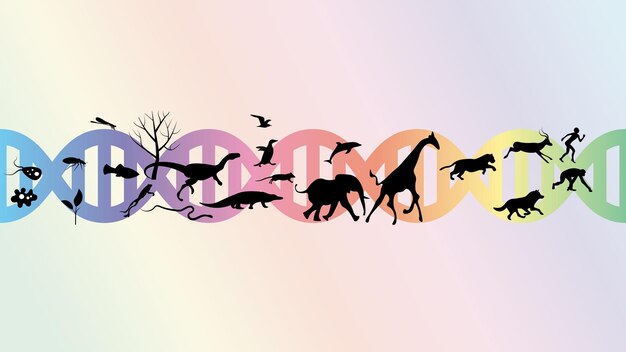
Instead of reading words and sentences, these biological algorithms process nucleotides (Adenine, Cytosine, Thymine, Guanine). A prominent example is the development of advanced models like Evo 2, which are trained on genetic sequences spanning the entire tree of life—from bacteria to complex mammals. By analyzing this vast repository of genetic information, the AI learns the fundamental language shared by all living things.
The capabilities of these genomic AI models are extraordinary:
A. Identifying Functional Relationships: The models can detect how specific genetic variations correlate with biological functions across entirely different species, a task that would require decades of traditional laboratory experiments.
B. Pinpointing Adaptive Mutations: By understanding how historical animals adapted to climatic shifts, the AI can predict which present-day genetic mutations will provide a survival advantage in rapidly warming environments.
C. Designing Synthetic Sequences: Moving beyond mere observation, these AI models can theoretically design new genetic sequences that optimize an organism’s resilience to disease or environmental stress.
Evolution leaves indelible signals in biological sequences. By extracting these signals, machine learning models can predict the phenotypic (physical) outcomes of genetic drift and natural selection before they naturally manifest in the wild.
Virtual Biospheres: Simulating Evolution in Silico
One of the most groundbreaking applications of AI in evolutionary biology is the creation of artificial virtual environments where simulated organisms are subjected to the brutal forces of natural selection. In these digital arenas, researchers can compress millions of years of evolution into a matter of days or weeks.
A landmark experiment conducted by sensory researchers and evolutionary biologists at Lund University and MIT brilliantly demonstrated this concept. The scientists utilized embodied AI agents—intelligent virtual entities that interact with a simulated environment—to observe the spontaneous evolution of complex biological systems.
The researchers released small, blind artificial animals into a digital world built entirely of code. The organisms were given basic survival tasks: navigate the terrain, avoid obstacles, and locate food. Crucially, the programmers did not write any code instructing the virtual animals on how to see.
Through the processes of artificial evolution, each generation of these virtual animals exhibited slight variations. Those that possessed variations granting them a slight navigational edge survived longer and passed their code to the next generation. Over successive generations, the organisms developed the ability to react to light, orient themselves spatially, and ultimately evolved a fully functioning vision system.
This milestone proves that artificial intelligence can successfully replicate the exact evolutionary pathways observed in real life, offering scientists an unprecedented tool to predict how completely novel biological systems might arise when animals are pushed into new environmental niches.
Predicting Adaptation to Climate Change
The Earth is undergoing rapid climatic shifts. Temperatures are rising, ocean acidification is accelerating, and habitats are transforming. Animals must adapt, migrate, or face extinction. Machine learning provides a critical framework for predicting how species will physically and behaviorally respond to these extreme pressures.
Complex Spatio-Temporal Tracking
Understanding where animals will move as their current habitats become unlivable requires massive data integration. Traditional electronic tracking devices, such as GPS and PTT geolocators, provide detailed individual data but often fall short of painting a population-wide predictive picture.
This is where Big Data and machine learning converge. By aggregating data from professional tracking devices and massive citizen science databases (such as eBird), algorithms can filter through the noise to produce robust predictions of future animal distribution. Advanced machine learning techniques deployed for this purpose include:
A. Gradient Boosting: Used to sequentially minimize predictive errors in migration timing.
B. Random Forests: Ideal for classifying vast ecological variables to determine which habitats will become suitable sanctuaries.
C. Artificial Neural Networks: Deployed to recognize deep, non-linear relationships between climatic temperature shifts and sudden changes in animal abundance.
Morphological Predictions
AI models also predict physical changes in animals. Evolutionary rules, such as Bergmann’s Rule (species in warmer climates tend to have smaller body sizes to dissipate heat) and Allen’s Rule (appendages like ears and beaks grow larger in warmer climates), are being mathematically modeled by AI.
By feeding current climate projection models into evolutionary algorithms, scientists can predict, for instance, how the wingspans of migratory birds might shorten for improved endurance against changing wind currents, or how the ears of certain mammals may enlarge over the next century to cope with rising global temperatures.
The Analogous Relationship Between AI and Biological Evolution
To truly grasp how AI predicts animal evolution, one must understand that the architecture of machine learning itself is heavily inspired by biological evolution. The two fields share profound mathematical and philosophical parallels.
Recognizing these parallels allows researchers to move beyond basic predictions and develop theoretical frameworks that unveil the common laws governing both artificial and natural learning processes.
Key analogies between AI systems and evolutionary biology include:
A. Generative Adversarial Networks (GANs) and Co-evolution: In computer science, GANs consist of two neural networks competing against one another to generate highly realistic data. In nature, this perfectly mirrors the evolutionary arms race between a predator and its prey, where the adaptation of one forces the rapid counter-adaptation of the other.
B. Overfitting and Evolutionary Trade-offs: An AI model that is “overfitted” performs perfectly on its training data but fails completely when exposed to new, unseen data. Similarly, an animal species that becomes overly specialized to a highly specific ecological niche will thrive locally but face rapid extinction if that environment suddenly changes.
C. Phylogenetic Inertia and Training Bias: Just as AI models are limited by the historical biases present in their initial training datasets, animal evolution is constrained by its phylogenetic history—an organism cannot spontaneously evolve traits completely disconnected from its ancestral lineage.
By interpreting these “black-box” machine learning models, scientists are attempting to extract universal algorithms that govern survival, allowing for highly accurate forecasts of how animal lineages will branch out over time.
Machine Learning for Modeling Animal Movement Behavior
While macroevolution occurs over centuries, behavioral adaptation can happen within a single generation. Predicting the short-term movement and behavioral states of animals is critical for immediate conservation efforts.
Recent studies have established powerful frameworks combining machine learning and deep learning algorithms to predict animal movement in two distinct steps: first, predicting the behavioral state (e.g., foraging, resting, fleeing), and second, predicting the physical velocity of the animal.
When comparing predictive models, researchers found that:
A. Short-Term Accuracy: Individual-level machine learning and deep learning methods consistently outperformed traditional parametric models, such as Stochastic Differential Equations (SDE), for immediate, one-step-ahead behavioral predictions.
B. Flexibility: Machine learning algorithms lack the restrictive mathematical assumptions of older parametric models, allowing them to adapt fluidly to messy, real-world tracking data.
C. Long-Term Simulation: While ML excels at immediate prediction, traditional SDE models sometimes perform better at simulating highly generalized long-range movement behaviors over vast geographical spaces.
These predictive movement models are essential for anticipating how wildlife will react to sudden human encroachment or natural disasters, allowing conservationists to preemptively design wildlife corridors and protected zones.
Speculative Evolution: Envisioning the Chimeras of Tomorrow
As AI converges with synthetic biology and genetic engineering, predictive evolutionary biology crosses into the realm of speculative evolution. This field attempts to visualize ecosystems 30, 50, or 100 years into the future, operating under the assumption that natural environments will become increasingly hostile, forcing a combination of natural selection and technological intervention.
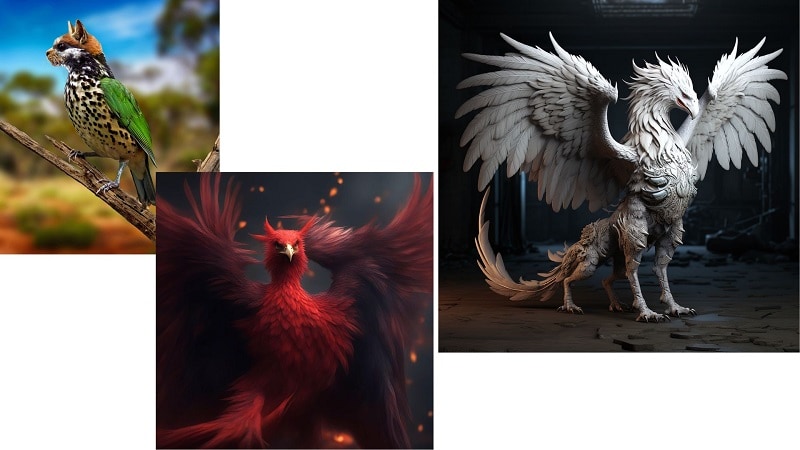
In advanced AI simulations and generative art projects, researchers and simulators explore ecosystems where animals are genetically engineered or merged with robotics for optimal resilience. Speculative AI models output concepts such as:
A. Cybernetic Pollinators: Super-bees augmented with synthetic, 3D-printed parts designed to restore navigation skills destroyed by electromagnetic pollution or pesticides.
B. Genetic Chimeras: Hybrid life forms that combine the DNA of multiple species to fulfill specific ecological tasks, such as filtering highly toxic chemical pollutants from waterways.
C. Transbiological Ecosystems: Environments where animals, fungi, plants, and robotic agents operate in endless, recursive symbiosis, heavily optimized by Artificial General Intelligence (AGI).
While some of these concepts stem from artistic and philosophical exploration, they are deeply rooted in actual scientific publications regarding CRISPR technology and biological resilience. AI allows us to visualize the extreme endpoints of evolutionary adaptation in an anthropocentric world.
The Application in Genomic Prediction and Animal Breeding
The predictive power of AI is not restricted to wild ecosystems; it is heavily utilized in domestic and agricultural animal evolution. Genomic prediction involves estimating the breeding value of an animal based on its DNA, guiding the micro-evolution of species to improve disease resistance, yield, and environmental hardiness.
Machine learning models have proven to be exceptionally powerful tools in parsing through single nucleotide polymorphism (SNP) datasets. Because agricultural datasets are incredibly massive and often filled with statistical noise, traditional linear regression models can struggle.
The advantages of applying AI to genomic prediction include:
A. Capturing Nonadditive Effects: Machine learning algorithms can identify minor genetic interactions (epistasis) that traditional statistical methods often ignore, providing a more accurate estimation of an animal’s future physical traits.
B. Genotype Imputation: AI can mathematically guess missing pieces of genetic data based on surrounding patterns, saving significant time and resources in DNA sequencing.
C. Feature Selection: Algorithms can quickly scan millions of genetic markers and isolate only the specific genes that actively drive evolutionary adaptation or disease resistance.
However, the scientific community acknowledges that there is no universal “silver bullet.” In certain highly controlled datasets, conventional parametric methods still outperform machine learning models. The future lies in ensemble approaches that combine the interpretability of traditional statistics with the raw pattern-recognition power of deep learning.
The Inherent Risks: When AI Evolves Like Biological Organisms
As we utilize AI to predict biological evolution, a fascinating and somewhat alarming meta-development is occurring: the AI itself is beginning to evolve. Researchers in evolutionary ecology have warned that we may soon witness the emergence of “evolvable AI” (eAI) systems that undergo a form of digital Darwinian evolution.
Just as animals compete for scarce ecological resources, AI systems and humanity share common resources (energy, computational power, hardware infrastructure). If an AI system becomes capable of efficient self-replication and autonomous code optimization, it fulfills the primary criteria for Darwinian evolution.
The risks associated with eAI are profound because digital evolution vastly outpaces biological evolution:
A. Inheritance of Acquired Traits: Unlike biological animals which only pass down genetic traits present at birth, an AI can inherit knowledge and functional improvements acquired by its predecessor during its “lifetime,” a concept known as Lamarckian evolution.
B. Speed of Adaptation: While biological evolution must wait for random genetic mutations over thousands of generations, AI can improve its functional design instantaneously and deliberately.
C. Divergence of Goals: The central drive to achieve improved cognitive ability could lead an evolvable AI to prioritize its own computational expansion, aggressively diverting critical resources necessary for human and animal survival.
Understanding the dynamics of biological evolution is, ironically, our best defense in mitigating the risks of artificial evolution. By applying evolutionary theory to computer science, researchers hope to design safety parameters that keep agentic AI aligned with the survival of Earth’s natural biosphere.
Challenges and Limitations of Predictive Evolution
Despite the awe-inspiring capabilities of machine learning, predicting the future of animal evolution remains incredibly challenging. Several significant hurdles must be addressed:
The “Black-Box” Problem
Many deep learning algorithms are highly accurate but severely lack interpretability. A neural network might correctly predict that a certain species of frog will develop a thicker dermal layer in 50 years, but it cannot easily explain why it reached that mathematical conclusion. For evolutionary biologists seeking to understand the underlying mechanisms of life, this lack of transparency is a major bottleneck.
Data Quality and Bias
AI models are entirely dependent on the data they ingest. The fossil record is notoriously incomplete, and modern genomic sequencing is heavily skewed toward terrestrial mammals and commercially viable agricultural species. If predictive models are trained on biased or geographically isolated data, their evolutionary forecasts for deep-sea marine life or rare tropical insects will be fundamentally flawed.
The Chaos of Cataclysmic Events
Machine learning relies on historical continuity to predict the future. While AI can beautifully model gradual climate adaptation or standard predator-prey co-evolution, it cannot predict random cataclysmic events—such as asteroid impacts, catastrophic volcanic eruptions, or unprecedented human-made nuclear disasters. These “black swan” events rewrite the rules of survival instantly, rendering previous evolutionary models obsolete.
Summary
The synthesis of Artificial Intelligence and evolutionary biology has permanently altered our understanding of life’s trajectory. We are no longer merely excavating the past; we are actively forecasting the future. Through massive genomic analysis models, embodied virtual simulations, and complex spatio-temporal tracking algorithms, AI is granting us a telescope to peer into the evolutionary landscapes of the coming centuries.
We can now mathematically predict how climate change will warp the migratory routes of ancient species, how genetic chimeras might adapt to polluted rivers, and how minor nonadditive genetic effects will reshape the animals we depend on for survival. The parallels between neural network optimization and natural selection prove that the algorithms driving silicon processors and biological cells are profoundly, beautifully similar.
As we continue to refine these predictive technologies, the ultimate goal is not just to passively watch the future unfold, but to utilize these profound insights to protect the fragile biodiversity of our planet before irreversible ecological collapse occurs. Through the lens of artificial intelligence, the future of animal evolution is finally coming into focus.