
Table of contents
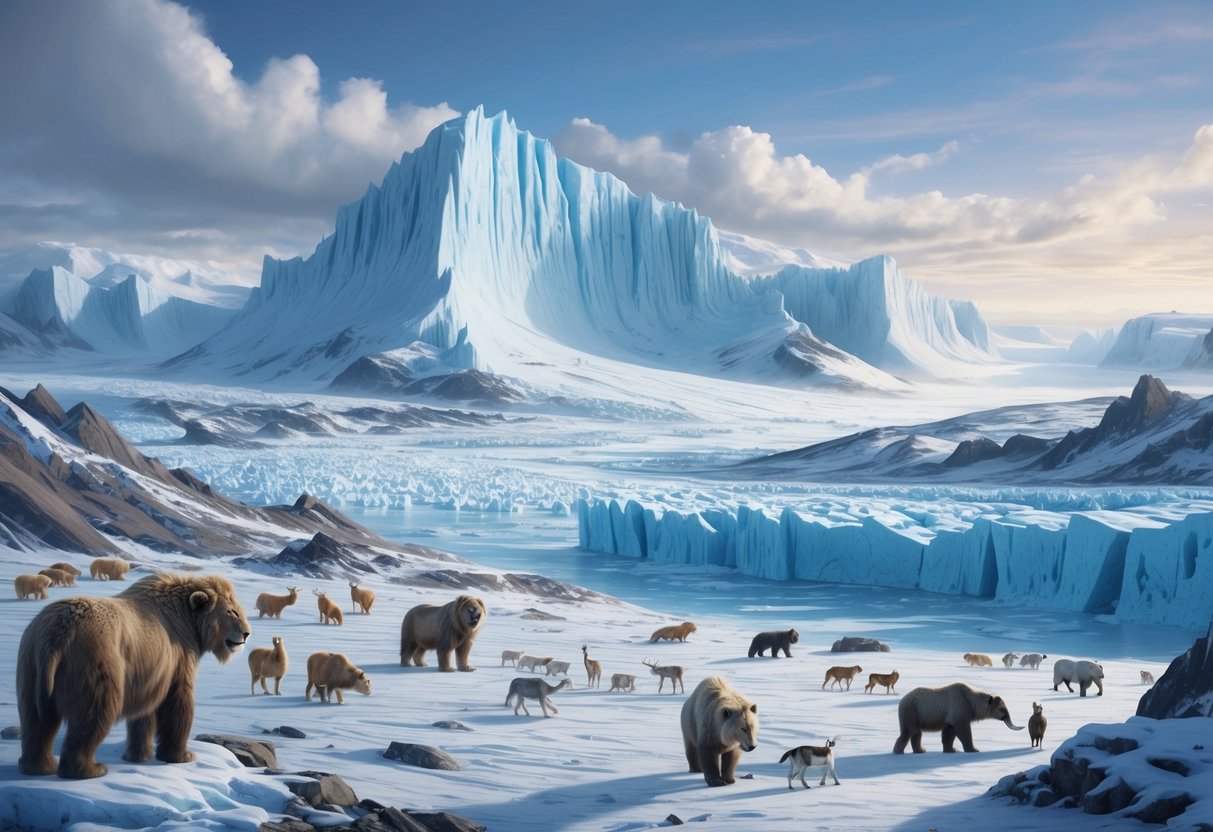
To comprehend the sheer size and physical prowess of Ice Age predators, one must first explore the unique environmental pressures that forged them. The Pleistocene was characterized by recurring glacial cycles where vast ice sheets periodically expanded toward the equator before retreating during warmer interglacial phases.
These climate oscillations transformed continents into vast ecosystems known as steppe-tundras or mammoth steppes. Stretching across Northern Eurasia, Beringia, and North America, these landscapes were covered in nutrient-dense grasses, sedges, and low-lying shrubs. Because cold, dry air suppressed dense forest growth, infinite vistas allowed giant herbivore herds to thrive in massive numbers.
This unprecedented density of massive prey created a ideal evolutionary playground for carnivores. To successfully bring down thick-skinned ungulates weighing several tons, predators evolved immense physical scale, specialized weaponry, and complex hunting strategies.
1. Smilodon: The Machairodontid Knife-Toothed Titan
Among all prehistoric carnivores, none captures human fascination quite like Smilodon, commonly known as the saber-toothed cat. Living across North and South America until around 10,000 years ago, Smilodon represented the pinnacle of hypercarnivorous feline evolution.
+-------------------------------------------------------------------------+
|                    SMILODON SPECIES PROFILE                             |
+-------------------------------------------------------------------------+
|  Scientific Classification : Machairodontinae (Saber-toothed felid)    |
|  Geographical Range      : North and South America                     |
|  Estimated Body Mass     : 160 kg to 400 kg (350 lbs - 880 lbs)        |
|  Defining Trait          : Elongated upper canine teeth (up to 28 cm)   |
|  Primary Prey Strategy   : Ambush grapple followed by precision slash   |
+-------------------------------------------------------------------------+
Anabolic Architecture and Grappling Mechanics
Unlike modern pantherines such as lions or tigers, which feature long, flexible bodies built for sprinting, Smilodon possessed a stocky, compact build similar to a modern bear. Its forelimbs were extraordinarily thick, supported by massive muscle insertion points on the humerus and radius.
Biomechanical studies reveal that Smilodon did not chase prey over long distances. Instead, it relied on dense cover to stalk close to its target before initiating a explosive burst of speed. Once within range, it used its powerful front arms to pin down large ungulates like bison, horses, or young mastodons.
The Truth About the Fabled Saber Canines
For decades, paleontologists debated how Smilodon utilized its legendary 28-centimeter (11-inch) upper canine teeth. Early theories suggested they were used to crush bone or punch through thick hides. However, structural finite element analysis demonstrates that these long teeth were relatively brittle laterally and susceptible to snapping if they struck bone.
Instead, Smilodon employed a specialized technique known as the “canine-shear bite”:
A. Subduing the Target: The cat used its formidable upper body strength to force the prey completely motionless onto the ground.
B. Exposing the Neck: It adjusted its grip to expose the soft vulnerable throat or carotid artery region of the prey animal.
C. Surgical Slash: Sinking its elongated canines into soft tissue, it severed major arteries and windpipes, causing rapid death by severe blood loss without risking broken teeth on bones.
2. Dire Wolf (Aenocyon dirus): The Heavyweight Apex Pack Hunter
Immortalized in mythology and modern popular culture, the dire wolf (Aenocyon dirus) was a real, terrifying presence across Pleistocene North America. Long considered a close relative of the modern gray wolf (Canis lupus), groundbreaking 2021 genomic studies published in scientific literature revealed that dire wolves belonged to an ancient, distinct lineage that diverged from other canids over 5 million years ago.
+-------------------------------------------------------------------------+
|                  DIRE WOLF VS. GRAY WOLF COMPARISON                     |
+-------------------------------------------------------------------------+
|  Feature             | Dire Wolf (Aenocyon dirus) | Gray Wolf (Canis)  |
+----------------------+----------------------------+--------------------+
|  Average Weight      | 60 - 70 kg (130-150 lbs)   | 35 - 50 kg         |
|  Skull Structure     | Broad, thick sagittal crest| Sleek, streamlined |
|  Bite Force Index    | Exceptionally high         | Moderate           |
|  Hunting Adaptation  | Bone-crushing pack stamina | Pursuit coursing   |
+----------------------+----------------------------+--------------------+
Morphological Mastery and Crushing Bite Strength
The dire wolf was larger and heavier than any living wild canine. Featuring broader skulls, shorter legs, and powerful muscle attachments, these predators were built for stability and bite torque rather than pure long-distance running speed.
Their jaws housed massive premolars equipped with heavy enamel capable of crushing bone to extract nutrient-rich bone marrow. While modern wolves frequently chase prey over vast open distances to exhaust them, dire wolves likely operated in dense social packs capable of ambushing and subduing larger, more aggressive prey species like western camels and prehistoric bison.

3. The Short-Faced Bear (Arctodus simus): The Giant Scavenger-Predator
Standing over 3.4 meters (11 feet) tall on its hind legs and weighing over 1,000 kilograms (2,200 pounds), Arctodus simus—the giant short-faced bear—was one of the largest terrestrial mammalian carnivores to ever walk the Earth.
Key Paleontological Insight: Isotopic analysis of nitrogen-15 isotopes preserved in Arctodus bones reveals a diet consisting almost exclusively of meat, proving it was an obligatory hypercarnivore rather than an omnivore like modern brown bears.
Long Legs and Unrivaled Dominance
Despite its common name, the short-faced bear did not possess a shortened snout; rather, its wide muzzle and shortened skull structure created an optical illusion while providing devastating bite force leverage.
Key biological adaptations included:
A. Passage-Oriented Limbs: Its unusually long, slender legs allowed efficient long-distance pacing across vast open steppe terrains.
B. Olfactory Dominance: Enlarged nasal cavities enabled the bear to detect decaying carcasses across scores of kilometers.
C. Kleptoparasitic Behavior: Thanks to its towering physical presence, Arctodus could easily intimidate rival predators like Smilodon or dire wolf packs, driving them away from fresh kills to claim the meat without expending energy on a hunt.
4. Panthera spelaea: The Mighty Eurasian Cave Lion
Spanning across the cold landscapes of Europe, Asia, and North America (as the subspecies Panthera spelaea atrox or American Lion), these magnificent felids were significantly larger than modern African lions.
+-------------------------------------------------------------------------+
|                  CAVE LION ECOLOGICAL ADAPTATIONS                       |
+-------------------------------------------------------------------------+
|  Adaptation          | Functional Purpose                               |
+----------------------+--------------------------------------------------+
|  Dense Undercoat     | Insulates body heat in sub-zero steppe tundras   |
|  Broad Paws          | Distributes body mass evenly over snowbanks      |
|  Retractable Claws   | Provides traction and secure gripping power      |
|  Group Dynamics      | Facilitates cooperative hunting of megafauna     |
+----------------------+--------------------------------------------------+
Evidence from Paleolithic Cave Art
Unlike many other prehistoric species whose visual appearances remain speculative, cave lions were vividly depicted by early human artist ancestors. Intricate Paleolithic cave paintings found in Chauvet Cave (France) reveal crucial anatomical details:
A. Absence of Heavy Manes: Male cave lions lacked the large, sweeping manes seen on modern male African lions, likely an adaptation to prevent snow accumulation and frostbite.
B. Tail Tuft and Faint Striping: Paleolithic drawings depict subtle faint coats, dark tail tufts, and muscular contours.
C. Cooperative Hunting: Artistic panels show multiple lions stalking together, suggesting sophisticated social group hunting behaviors similar to modern prides.
Comparative Analysis of Prehistoric Carnivores
Understanding the sheer diversity of Ice Age predators requires analyzing how these magnificent creatures filled distinct ecological niches to minimize direct competition.
| Species | Primary Habitat | Approximate Weight | Specialized Weaponry | Hunting Style |
| Smilodon fatalis | Woodlands & Plains | 160 – 280 kg | Elongated saber canines | Short-burst ambush |
| Aenocyon dirus | Open Grasslands | 60 – 70 kg | Heavy jaw & crushing teeth | Pack endurance hunting |
| Arctodus simus | Open Steppe / Tundra | 800 – 1,000+ kg | Immense height & reach | Kleptoparasitism / Apex ambush |
| Panthera spelaea | Tundra Steppe | 200 – 350 kg | Muscular limbs & sharp claws | Pride cooperation |
| Homotherium | Forested Steppe | 150 – 250 kg | Serrated scimitar teeth | Diurnal long-distance stalking |
Lesser-Known Ice Age Predators
While felids and canids often claim the spotlight, several other remarkable predators roamed the Pleistocene landscape, maintaining balance in fragile ice-bound ecosystems.
Homotherium: The Scimitar-Toothed Cat
Distinct from Smilodon, Homotherium possessed shorter, serrated upper canines shaped like scimitar blades. Characterized by long forelimbs and a sloping back resembling a modern hyena, Homotherium was uniquely built for long-distance pursuit tracking during daylight hours. Fossil evidence from Friesenhahn Cave in Texas demonstrates that Homotherium packs deliberately targeted young mammoths and mastodons, bringing them back to denning sites.
Megalania: The Giant Australian Dragon
Far away from the icy northern tundras, Pleistocene Australia hosted its own terrifying cold-blooded apex predator: Varanus priscus (formerly Megalania).
A. Massive Proportions: Reaching lengths between 4.5 to 6 meters (15 to 20 feet), it was the largest terrestrial lizard to ever exist.
B. Venom Delivery Systems: Like its modern cousin, the Komodo dragon, Megalania possessed toxic salivary glands that induced shock and prevented blood clotting in prey.
C. Ambush Strategy: Hiding near waterholes, it attacked giant marsupials such as Diprotodon, delivering catastrophic bites before tracking the weakened prey.
Hunting Dynamics and Prey Interplay
The predator-prey dynamic during the Pleistocene was an evolutionary arms race driven by physical scale and survival tactics.
+-------------------------------------------------------------------------+
|               PLEISTOCENE PREDATOR-PREY FOOD WEB CYCLE                  |
+-------------------------------------------------------------------------+
|                                                                         |
|  [ MEGAHERBIVORES ] ---> (Mammoths, Mastodons, Ground Sloths)           |
|          |                                                              |
|          v                                                              |
|  [ APEX HUNTERS ]  ---> (Smilodon, Cave Lion, Homotherium)                 |
|          |                                                              |
|          v                                                              |
|  [ SCAVENGERS ]   ---> (Arctodus simus, Dire Wolves, Vultures)          |
|                                                                         |
+-------------------------------------------------------------------------+
To survive against armored and massive herbivores, carnivores were forced to adapt continuously:
A. Targeting Vulnerable Juveniles: apex hunters rarely attacked fully grown adult mammoths; instead, they isolated calves and sick individuals.
B. Niche Partitioning: Different predators hunted at varying times of day and across specific terrain types to avoid fatal territorial disputes.
C. Resource Maximization: Crushing bones to swallow marrow allowed pack hunters like dire wolves to survive harsh winter periods when live prey was scarce.
Causes of Mass Extinction
Approximately 12,000 to 10,000 years ago, at the close of the Pleistocene Epoch, a catastrophic event known as the Quaternary Extinction Event wiped out majority of Earth’s megafauna. The disappearance of giant herbivores directly triggered the collapse of the top predators dependent upon them.
Scientific consensus highlights two primary driving forces behind this extinction:
Climate Transformation and Habitat Loss
As the last glacial period ended, rapid warming drastically altered global weather patterns. The expansive, highly nutritious mammoth steppe grassland biome dissolved, replaced by dense coniferous forests, wet tundra bogland, and arid deserts. Herbivore populations crashed due to dietary starvation, initiating a severe trophic cascade up the food chain.
Human Overhunting and Competition
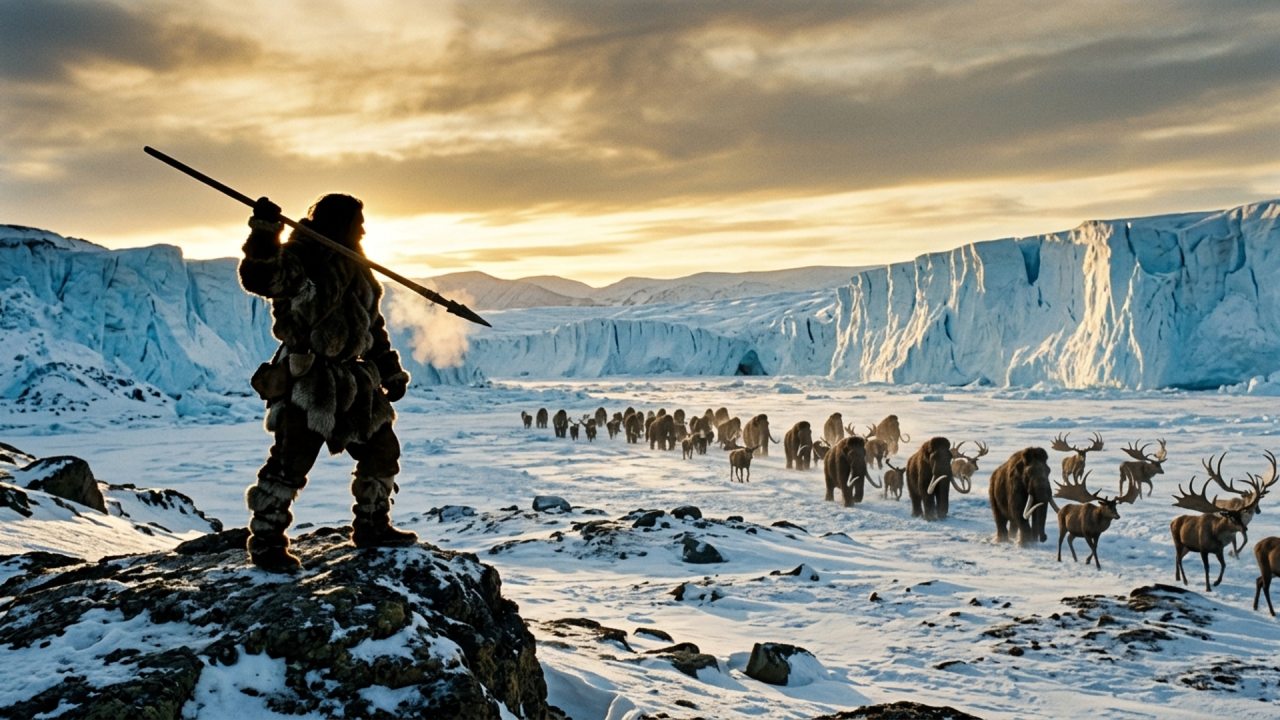
The expansion of early human hunter-gatherer populations armed with sophisticated projectile weapons (such as Clovis points and spear-throwers) added immense pressure to already vulnerable animal populations. Early humans competed directly with top carnivores for prey while actively defending territories against dangerous predators.
Modern Science and Breakthrough Discoveries
Contemporary paleontology is experiencing a revolution driven by modern technology. Researchers no longer rely solely on fossilized bone structures to reconstruct ancient life.
+-------------------------------------------------------------------------+
|                  ADVANCED PALEONTOLOGICAL METHODS                       |
+-------------------------------------------------------------------------+
|  Methodology         | Scientific Breakthrough Output                   |
+----------------------+--------------------------------------------------+
|  Ancient DNA (aDNA)  | Maps genetic divergence and evolutionary trees   |
|  Isotopic Analysis   | Reveals specific dietary habits and migration    |
|  CT Scan & CAD       | Calculates bite force torque and muscle stress   |
|  Permafrost Recovery | Yields intact soft tissue, fur, and internal organs|
+----------------------+--------------------------------------------------+
In recent years, remarkably preserved frozen specimens recovered from Siberian permafrost—including cave lion cubs (Uyan and Dina) and mummified wolf heads—have provided unprecedented insight into soft tissue structures, hair pigmentation, and even ancient viral pathogens.
Conclusion: The Enduring Legacy of Ice Age Beasts
The ancient predators of the Ice Age represent one of the most astonishing chapters in the history of terrestrial life. From the surgical precision of Smilodon to the bone-crushing strength of dire wolves and the colossal height of Arctodus simus, these specialized carnivores mastered cold environments for millions of years.
Studying these extinct apex hunters offers vital lessons for modern conservation biology. By examining how ancient climate shifts and human impacts dismantled prehistoric ecosystems, scientists gain invaluable knowledge necessary to protect Earth’s remaining wild apex predators today.