
Table of contents
For hundreds of millions of years, giant reptiles dominated the land, sea, and skies of Earth. Today, their physical presence is remembered through preserved remnants locked within layers of sedimentary rock. Uncovering ancient prehistoric dinosaur fossils is one of the most intriguing and scientifically significant endeavors in human history. It bridges the gap between deep geological time and modern scientific understanding, allowing researchers to reconstruct ecosystems that flourished long before humans ever walked the planet.
This comprehensive guide explores the fascinating world of dinosaur fossil discovery. From the complex biochemical processes that transform bone into stone to the modern high-tech tools used by paleontologists today, you will discover how these ancient treasures are identified, excavated, and preserved for future generations.
1. The Geological Epochs of the Dinosaurs
To understand where and how dinosaur fossils are uncovered, one must first grasp the vast timeframe during which these creatures lived. Dinosaurs flourished during the Mesozoic Era, a period spanning approximately 180 million years. This era is divided into three distinct geological periods, each characterized by unique climate conditions, evolutionary milestones, and fossil preservation patterns.
A. The Triassic Period (252 to 201 Million Years Ago): The Mesozoic Era began in the wake of the Permian-Triassic extinction event, the most severe extinction event in Earth’s history. During the Late Triassic, the first true dinosaurs emerged. These early creatures were generally small, bipedal, and agile. Fossils from this period are relatively rare compared to later epochs, but key locations such as Argentina’s Ischigualasto Formation have yielded invaluable specimens of early archosaurs and primitive dinosaurs like Eoraptor and Herrerasaurus.
B. The Jurassic Period (201 to 145 Million Years Ago): As the supercontinent Pangaea began to break apart, global climates became warmer and more humid, encouraging lush vegetation. This environmental shift triggered an explosion in dinosaur diversity and size. The Jurassic Period witnessed the rise of giant sauropods like Brachiosaurus and Apatosaurus, alongside terrifying predators like Allosaurus. Fossil beds from this era, such as the famous Morrison Formation in North America, provide a rich record of booming terrestrial ecosystems.
C. The Cretaceous Period (145 to 66 Million Years Ago): Representing the peak of dinosaur evolution and diversity, the Cretaceous Period introduced iconic species such as Tyrannosaurus rex, Triceratops, Velociraptor, and giant armored ankylosaurs. Continents drifted closer to their modern positions, creating distinct regional environments and isolated evolutionary paths. The Cretaceous came to a dramatic end 66 million years ago when an asteroid impact combined with intense volcanic activity triggered a mass extinction event, wiping out non-avian dinosaurs.
2. How Dinosaur Fossils Are Formed
The discovery of a dinosaur fossil is a statistical anomaly. The vast majority of organisms that died in prehistoric times decayed completely, leaving no trace behind. For a dinosaur bone to survive for tens or hundreds of millions of years, a precise sequence of environmental and chemical conditions must occur immediately following the animal’s death.
A. Rapid Burial in Sedimentary Environments: The most critical step in fossilization is immediate isolation from oxygen, scavengers, and weather erosion. When a dinosaur died near a riverbank, lakebed, or floodplain, seasonal floods or mudslides could rapidly bury the carcass under thick layers of mud, sand, or silt. This rapid anaerobic burial significantly slowed organic decomposition.
B. Permineralization (Petrifaction): Over thousands of years, accumulated sediment layers exerted immense pressure on the buried remains. Groundwater rich in dissolved minerals—such as silica, calcite, iron oxides, and pyrite—seeped into the microscopic pores of the dinosaur’s bones. As the original organic material gradually broke down, these minerals crystallized within the cellular spaces. Over millions of years, the bone was completely converted into a solid mineral replica, retaining its original structure down to the microscopic level.
C. Natural Molds and Casts: In some geological settings, acidic groundwater dissolved the original bone entirely before permineralization could fully occur. This left behind a hollow cavity in the rock that matched the exact shape of the bone, known as a natural mold. When mineral-rich sediments later filled this hollow space and hardened, they created a three-dimensional natural cast of the fossilized object.
D. Carbonization and Soft-Tissue Preservation: While bones and teeth form the vast majority of fossil finds, soft tissue preservation occasionally occurs under extraordinary conditions. Through carbonization, organic matter exposed to high pressure and heat releases oxygen, hydrogen, and nitrogen, leaving behind a thin carbon film. This process has preserved fine details like skin impressions, internal organ outlines, and structural feathers in specimens found in fine-grained volcanic ash layers.
E. Unaltered Preservation and Inclusions: Extremely rarely, prehistoric material is preserved with minimal chemical change. While complete dinosaur bodies preserved in amber are a fantasy of science fiction, small vertebrate remains, feathers, and skin fragments have been uncovered trapped in solidified tree resin dating back to the Cretaceous Period.
3. The Paleontological Excavation Process
Unearthing a prehistoric dinosaur fossil is a delicate, labor-intensive process that requires meticulous planning, technical skill, and deep geological knowledge. A typical field excavation follows several rigorous scientific stages.
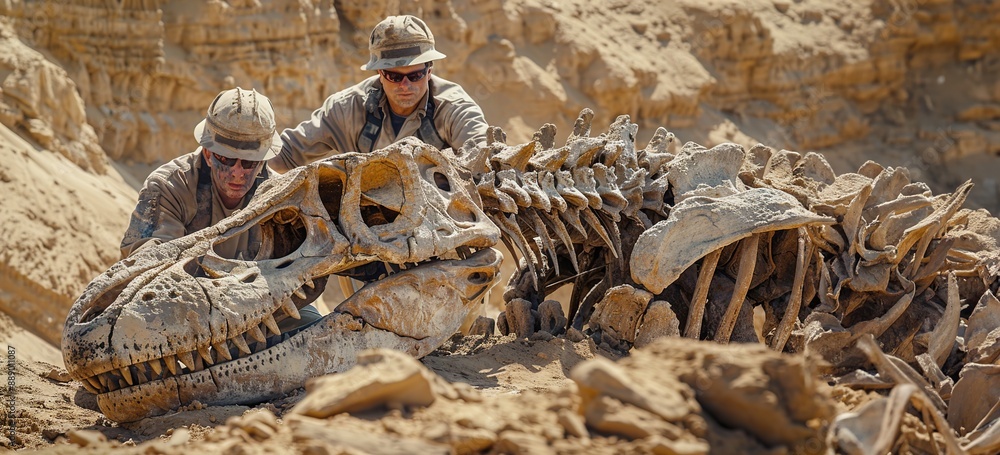
A. Geological Mapping and Prospecting: Paleontologists do not dig randomly. Excavations begin with thorough research into geological survey maps to locate sedimentary rock formations of the correct age (Triassic, Jurassic, or Cretaceous). Field teams then walk across eroded badlands, canyon walls, and exposed ridges looking for weathered fragments of fossilized bone appearing on the surface.
B. Surface Exploration and Assessment: Once bone fragments are located on the surface, researchers trace the float (weathered debris) uphill to find the exact rock layer from which the fossil is eroding. The team then carefully evaluates the site to determine whether the fossil is an isolated fragment or part of an articulated, intact skeleton embedded deeper in the rock matrix.
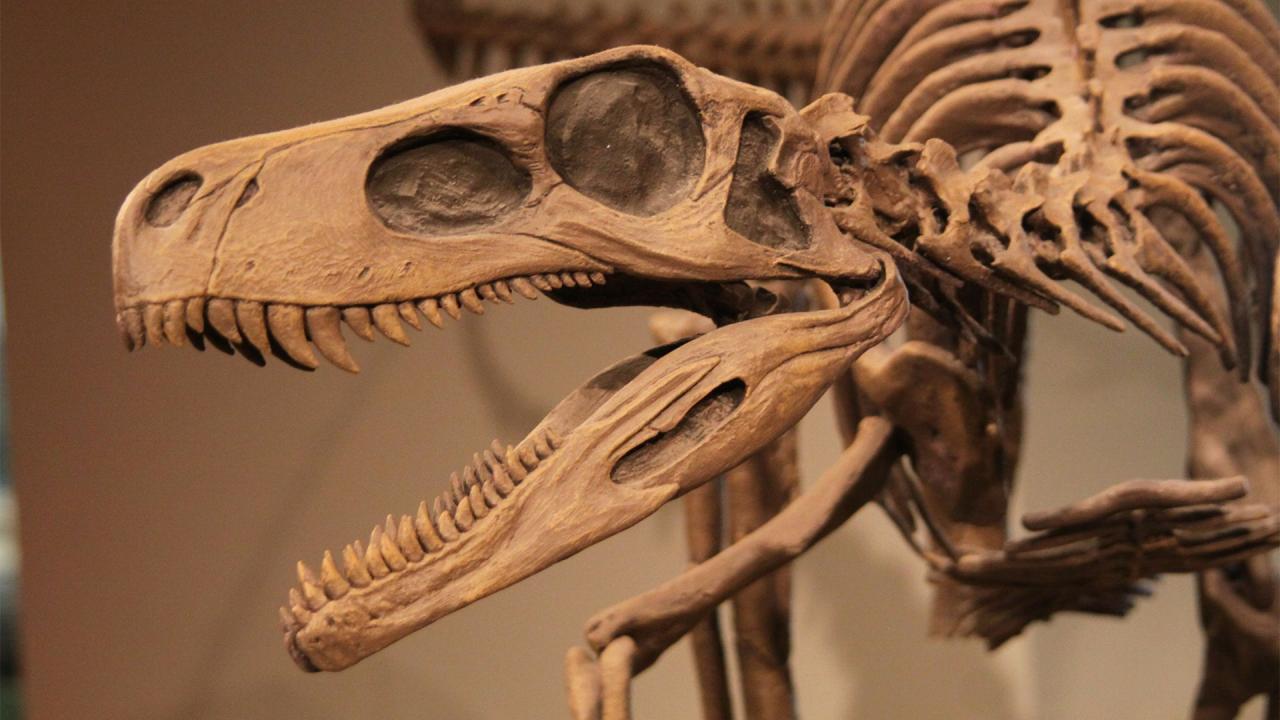
C. Overburden Removal and Matrix Excavation: To reach the fossil, excavators must carefully remove the overlying soil and non-fossiliferous rock, known as overburden. Heavy equipment like backhoes or jackhammers may be used for top layers, but as workers draw near the fossil layer, tools instantly shift to hand pickaxes, chisels, hammers, and delicate dental picks to avoid damaging the specimen.
D. Stabilization and Field Consolidation: Ancient fossilized bone is often extremely brittle and full of hairline fractures. As soon as a portion of the bone is exposed to air, paleontologists apply specialized chemical consolidants and liquid adhesives (such as paraloid B-72) to bond the fragile bone matrix together and prevent fracturing.
E. Plaster Jacketing and Safe Extraction: To transport the specimen safely from the field to a laboratory, paleontologists use a technique adapted from medicine. The exposed fossil, still embedded in a protective block of surrounding rock (the matrix), is covered with moist tissue paper or foil. It is then wrapped in bandages soaked in plaster of Paris or burlap strips. Once the plaster hardens into a rigid shell, the jacketed block is undercut, flipped, sealed on the bottom, and prepared for transport.
4. Modern Technologies Transforming Fossil Excavation
While traditional hammers, chisels, and brushes remain staple tools in paleontology, the 21st century has introduced high-tech innovations that have revolutionized how dinosaur fossils are discovered, analyzed, and preserved.
A. LiDAR and Satellite Remote Sensing: Airborne LiDAR (Light Detection and Ranging) and satellite imagery allow paleontologists to scan vast geographic regions and penetrate dense forest canopies. By analyzing topographic contours and micro-relief changes, researchers can map geological formations and identify potential fossil-bearing sites without needing months of manual surface reconnaissance.
B. Industrial CT Scanning and Micro-CT Imaging: Industrial Computed Tomography (CT) scanners have eliminated the need to mechanically carve away rock to inspect hidden anatomical features. High-resolution X-ray beams can penetrate thick rock matrixes and intact plaster jackets, revealing delicate internal skull cavities, embryonic bones inside fossilized eggs, and braincase structures without touching the specimen.
C. Geochemical Isotope Analysis: Advanced mass spectrometry allows scientists to examine the chemical composition of fossilized teeth and bones at an atomic level. Oxygen and carbon isotope ratios within fossilized enamel reveal vital information about an ancient dinosaur’s diet, body temperature, migration habits, and local water sources.
D. Photogrammetry and 3D Laser Scanning: Paleontologists use digital photogrammetry—combining dozens of overlapping high-resolution photos—to generate millimeter-accurate 3D digital models of fossil sites, trackways, and individual bones. These digital assets enable global collaboration, allowing researchers around the world to study rare specimens virtually.
5. World-Famous Dinosaur Fossil Hotspots
Dinosaur fossils have been discovered on every continent, including Antarctica. However, certain geographical regions stand out as extraordinary treasure troves due to their unique geological histories and exposed sedimentary rocks.
A. The Hell Creek Formation (United States): Spanning parts of Montana, North Dakota, South Dakota, and Wyoming, the Hell Creek Formation provides a rich look into the Late Cretaceous Period. This region has yielded some of the world’s most famous dinosaurs, including complete skeletons of Tyrannosaurus rex, Triceratops, Edmontosaurus, and Pachycephalosaurus.
B. The Yixian Formation in Liaoning (China): Famous for its exquisite fine-grained volcanic ash deposits (known as the Jehol Biota), Liaoning Province has transformed our understanding of dinosaur biology. The rapid burial by volcanic ash preserved fine details like feathers, skin structures, and stomach contents in primitive birds and feathered theropods like Sinosauropteryx and Microraptor.
C. Patagonia (Argentina): The vast desert landscapes of southern Argentina are famous for yielding giant creatures. Patagonia is the home of titanic sauropods, including Argentinosaurus and Patagotitan mayorum—some of the largest land animals to ever exist—as well as formidable apex carnivores like Giganotosaurus.
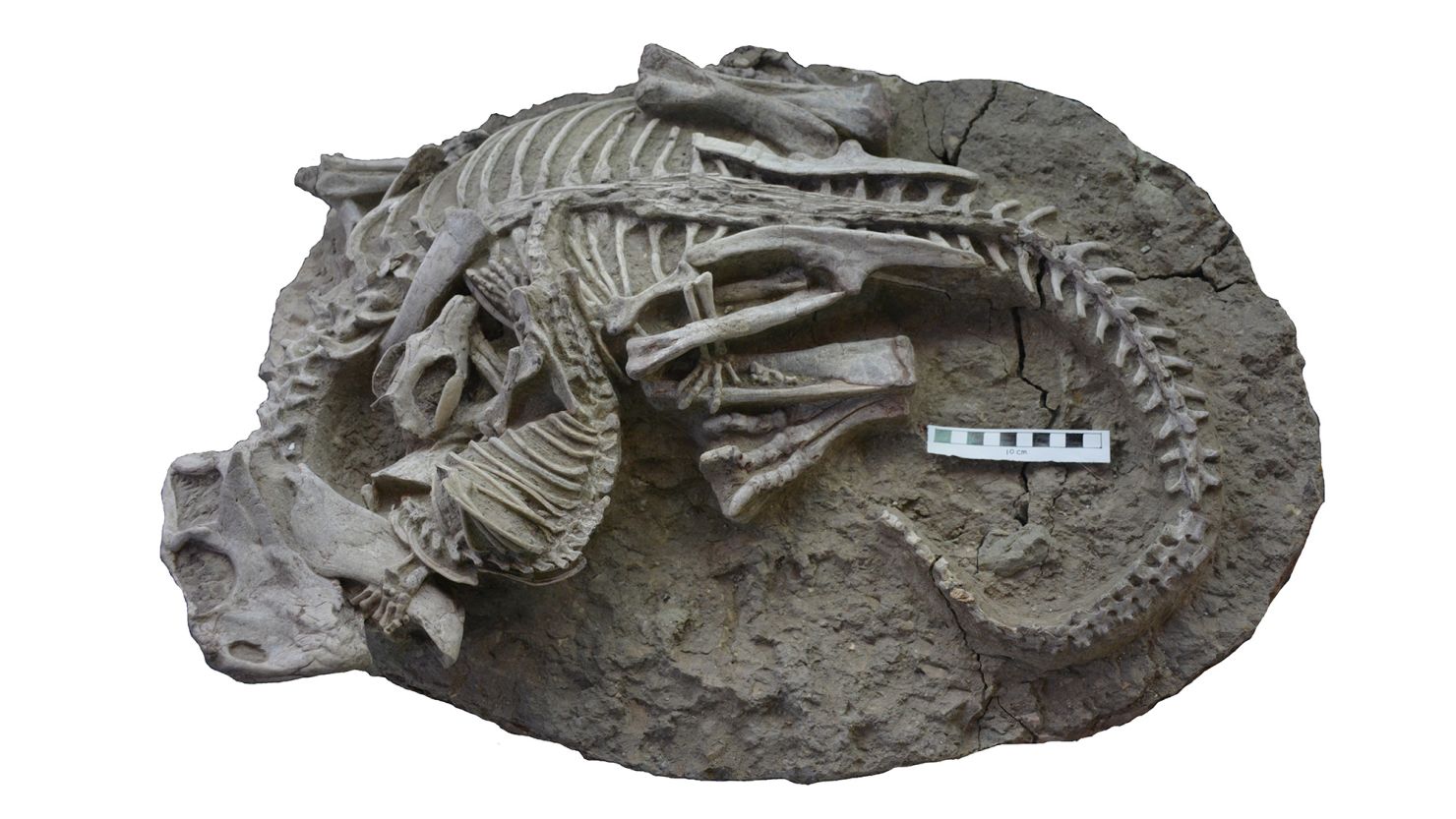
D. The Flaming Cliffs of the Gobi Desert (Mongolia): Discovered by explorer Roy Chapman Andrews in the 1920s, the Flaming Cliffs are world-famous for yielding the first confirmed dinosaur eggs. The sand dunes of the Cretaceous Gobi preserved exceptional specimens of Protoceratops, Velociraptor, and oviraptorids caught in sudden sandstorms.
6. From Excavation Site to Museum Display
Unearthing a fossil in the field is only the beginning of a long scientific journey. The process of turning a raw, plaster-jacketed block of stone into a museum exhibit can take thousands of hours of skilled labor.
A. Laboratory Preparation: In the paleontology prep lab, technicians use pneumatic air scribes (miniature jackhammers running on compressed air), magnifying lenses, and fine needles to carefully carve away the protective matrix surrounding the bone. The work requires immense patience, as removing rock around fragile bone structures can take months or years.
B. Conservation and Chemical Stabilization: Once fully exposed, the bones are cleaned and treated with archival-grade resins. Missing fragments are carefully pieced back together using specialized glues designed to be fully reversible if future scientific techniques require re-examination.
C. Scientific Documentation and Description: Before a fossil goes on public display, paleontology teams measure, catalog, and publish detailed anatomical studies of the bone structures. If the specimen belongs to an undescribed species, it receives a formal scientific name published in a peer-reviewed journal along with a description of its evolutionary placement.
D. Armature Mounts and Public Exhibition: To display a giant skeleton in a museum, specialists build custom steel frameworks, called armatures, that support the heavy weight of the fossilized bones without causing structural stress. Today, many public displays feature lightweight 3D-printed casts of the original bones, keeping the fragile original fossils safe in climate-controlled research vaults for ongoing scientific study.
7. Frequently Asked Questions About Dinosaur Fossils
A. How do scientists know how old a dinosaur fossil is? Paleontologists determine the age of fossils using radiometric dating of igneous (volcanic) rock layers found directly above and below the sedimentary layer containing the fossil. By measuring the radioactive decay of elements like potassium and argon in volcanic ash, scientists can pinpoint the age of surrounding rock layers with incredible accuracy.
B. Can scientists extract dinosaur DNA from fossils? Despite popular science-fiction stories, DNA is a fragile organic molecule that degrades completely over hundreds of thousands of years. Because dinosaur fossils are over 66 million years old, intact dinosaur DNA cannot survive. However, scientists have successfully extracted preserved ancient proteins and collagen fragments from exceptionally preserved bones.
C. What is the difference between an body fossil and a trace fossil? Body fossils are the actual preserved physical remains of an organism, such as bones, teeth, claws, and skin impressions. Trace fossils (also called ichnofossils) are evidence of the animal’s life and behavior, including fossilized footprints, trackways, burrows, nests, and fossilized dung (coprolites).
Conclusion: The Expanding Frontier of Paleontology
Uncovering ancient prehistoric dinosaur fossils is far more than a quest for museum centerpieces. It is a vital scientific discipline that unlocks deep insights into how life on Earth adapts, evolves, and responds to dramatic environmental shifts. As field methods improve and non-invasive technologies evolve, paleontologists continue to make groundbreaking discoveries, proving that the age of dinosaurs still holds countless secrets waiting to be unearthed beneath our feet.