
Table of contents
Throughout human history, warfare has evolved through technological revolutions, transitioning from sword and shield to firearms, heavy artillery, aerial surveillance, and autonomous drones. Yet, despite the billions of dollars invested in cutting-edge radar, infrared sensors, and artificial intelligence, one of the most effective defense assets on the modern battlefield remains entirely biological: the military working dog (MWD). These four-legged warriors possess organic capabilities that no machine has ever successfully duplicated.
Military service dogs do far more than offer companionship to troops in hostile environments. They serve as frontline scouts, bomb detectors, trackers, search-and-rescue specialists, and emotional anchors for combat veterans returning home with psychological trauma. Day after day, these extraordinary animals place themselves in harm’s way to protect human lives. Their olfactory senses, physical agility, unwavering loyalty, and acute instincts allow them to detect hidden explosives, intercept enemy combatants, and navigate treacherous terrain long before human soldiers even notice a threat.
Understanding how military service dogs operate requires examining their historical roots, their rigorous training regimens, the specific breeds suited for these missions, and the long-term impact they have on battlefield survival and post-combat healing. By exploring every facet of their service, we gain a profound appreciation for why these animals are universally recognized as irreplaceable life-savers.
The Historical Evolution of Canines in Conflict
The partnership between humans and dogs in times of warfare is not a modern invention; it is a bond refined over thousands of years. Early historical records show that ancient civilizations recognized the natural defensive instincts of dogs and harnessed them for battle, guard duties, and communication across long distances.
A. Ancient Warfare and Classical Antiquity
The Egyptians, Greeks, and Romans were among the earliest societies to utilize dogs in warfare. Ancient Roman legions equipped heavy dogs, such as the Molossus (an ancestor of modern Mastiffs), with spiked collars and light armor to disrupt enemy ranks during battle. These dogs served as formidable weapons capable of disorienting infantry and guarding military camps against night raids.
B. The Middle Ages and Renaissance
During medieval conflicts, dogs were primarily tasked with guarding strategic castles, perimeter defenses, and supply lines. They were also used to deliver messages across active battlefields because their speed and low physical profile made them significantly harder for enemy archers to intercept than mounted human couriers.
C. World War I and World War II
The modern paradigm of military working dogs took shape during the major conflicts of the 20th century. In World War I, dogs performed crucial roles as sentries, casualty dogs (Mercy Dogs) trained to locate wounded soldiers in No Man’s Land, and cable-laying assistants. Recognizing their immense value, nations formalized official canine military units during World War II. The United States created the “K-9 Corps” in 1942, training thousands of dogs for sentry duty, scout duty, and messenger work across European and Pacific theaters.
D. Vietnam War to the Global War on Terror
In the dense jungles of Vietnam, scout dogs saved an estimated 10,000 human lives by detecting ambushes, tripwires, and hidden tunnel networks well before human reconnaissance teams could spot them. In the 21st century, conflicts in Afghanistan and Iraq shifted the focus heavily toward counter-insurgency and counter-IED (Improvised Explosive Device) operations, where canines became the primary defense against hidden explosives.
Primary Breeds Chosen for Military Service
Not every canine breed possesses the physical traits, temperament, drive, and intelligence necessary for military duty. Armed forces around the globe maintain strict criteria when selecting candidates for training. The chosen breeds must balance intense prey drive with deep obedience and physical resilience.
A. Belgian Malinois
The Belgian Malinois has become the premier choice for special operations forces, including the U.S. Navy SEALs and Army Rangers. Lighter and faster than German Shepherds, the Malinois exhibits extraordinary athleticism, high stamina, and an exceptionally intense drive to work. Their compact build allows them to perform tandem skydiving jumps, fast-rope from helicopters, and maneuver through tight urban spaces.
B. German Shepherd
Long considered the iconic military working dog, the German Shepherd offers an optimal balance of intelligence, strength, trainability, and intimidation. Their dual-purpose capability allows them to transition seamlessly from detecting explosives via scent to apprehending hostile combatants with powerful bite mechanics.
C. Dutch Shepherd
Similar in structure and temperament to the Belgian Malinois, the Dutch Shepherd is renowned for its high intelligence, physical agility, and extreme climate tolerance. They are widely utilized by NATO forces for tracking, patrol, and tactical assault missions.
C. Labrador Retriever
While less suited for aggressive protection work, Labrador Retrievers excel in Specialized Search Dog (SSD) roles. Their friendly demeanor, exceptionally high food-and-toy motivation, and world-class scenting capabilities make them ideal for specialized explosive detection and off-leash perimeter clearance, especially in environments where public interaction is common.
D. Doberman Pinscher and Boxers
Historically prominent in earlier conflicts such as WWII, these breeds provided exceptional sentry and courier support. While largely superseded by Shepherds and Malinois in frontline modern infantry tactics, their historic contributions laid the groundwork for today’s military canine selection frameworks.
Specialized Roles and Tactical Operations
Modern military working dogs are not uniform in their training; they are assigned specialized roles based on their individual talents, physical capabilities, and behavioral profiles.
A. Explosive Detection Dogs (EDD)
Explosive detection is arguably the single most critical life-saving role a military dog performs. These canines are trained to identify minute vapor traces from dozens of distinct chemical compounds used in homemade explosives, roadside bombs, and artillery shells. Their ability to pinpoint an IED allows bomb disposal units to neutralize threats before troops step into target zones.
B. Patrol and Apprehension Dogs
Patrol dogs act as physical deterrents and force multipliers during combat patrols and base perimeter defense. They can locate enemy combatants hiding in dense foliage, dark buildings, or subterranean complexes. When commanded, they can sprint at high speeds to subdue a fleeing or aggressive suspect using controlled bite techniques until human handlers secure the scene.
C. Dual-Purpose K9s (Patrol & Detection)
Combining the skill sets of patrol and explosive (or narcotics) detection, dual-purpose dogs represent the backbone of conventional military K9 units. They provide simultaneous offensive protection and hazard detection during routine motorized and foot patrols.

D. Combat Assault Dogs (CAD)
Assigned to elite counter-terrorism and special operational groups, Combat Assault Dogs undergo advanced tactical preparation. They are equipped with specialized body armor, night-vision cameras, waterproof communication vests, and tactical goggles (Doggles). They lead raids into high-risk compound structures to gather intelligence, locate traps, and neutralize hostile targets before human operators enter.
E. Tracker Dogs
Using subtle ground-disturbed scents and human skin flakes, tracker dogs can follow enemy movements across miles of rugged terrain hours after the targets have passed. These dogs are essential for search-and-rescue operations involving downed pilots or isolated friendly personnel.
The Rigorous Training and Selection Process
Transforming a high-energy puppy into a disciplined, life-saving military asset requires months of intense behavioral shaping and specialized instruction. The standard for qualification is extraordinarily demanding; fewer than half of the candidates evaluated successfully graduate to operational status.
A. Puppy Breeding and Early Environmentalization
Many military branches manage dedicated breeding programs, such as the U.S. Department of Defense’s program at Joint Base San Antonio-Lackland. From birth, puppies are systematically exposed to diverse environments, surface textures, loud noises, light variations, and social stimuli to foster psychological stability and confidence.
B. Basic Obedience and Behavioral Testing
Around 12 to 18 months of age, dogs enter formal screening. Evaluation criteria focus heavily on drive dynamics: reward drive (passion for a ball or tug toy), environmental courage (lack of fear on slick floors, elevated surfaces, or noisy spaces), and physical stamina. Basic obedience forms the bedrock of control, ensuring instant response to verbal commands and hand signals.
C. Scent Imprinting and Detection Training
Detection training utilizes positive reinforcement conditioning. Handlers introduce target scents—ranging from C4, TNT, and black powder to specific chemical precursors—and pair identification with immediate play rewards. Through repetition, the dog learns that locating a hidden scent trace leads to their favorite toy, turning critical bomb-sniffing operations into a game of search and retrieve.
D. Tactical Integration and Decensitization
Candidate dogs must learn to operate in chaotic combat conditions without panicking. Training includes desensitization to gunfire, artillery blasts, vehicle engine roar, and helicopter rotor noise. Dogs learn to climb ladders, swim long distances, ride in armored vehicles, and jump from aircraft alongside their human handlers.
E. Handler-Canine Team Bonding
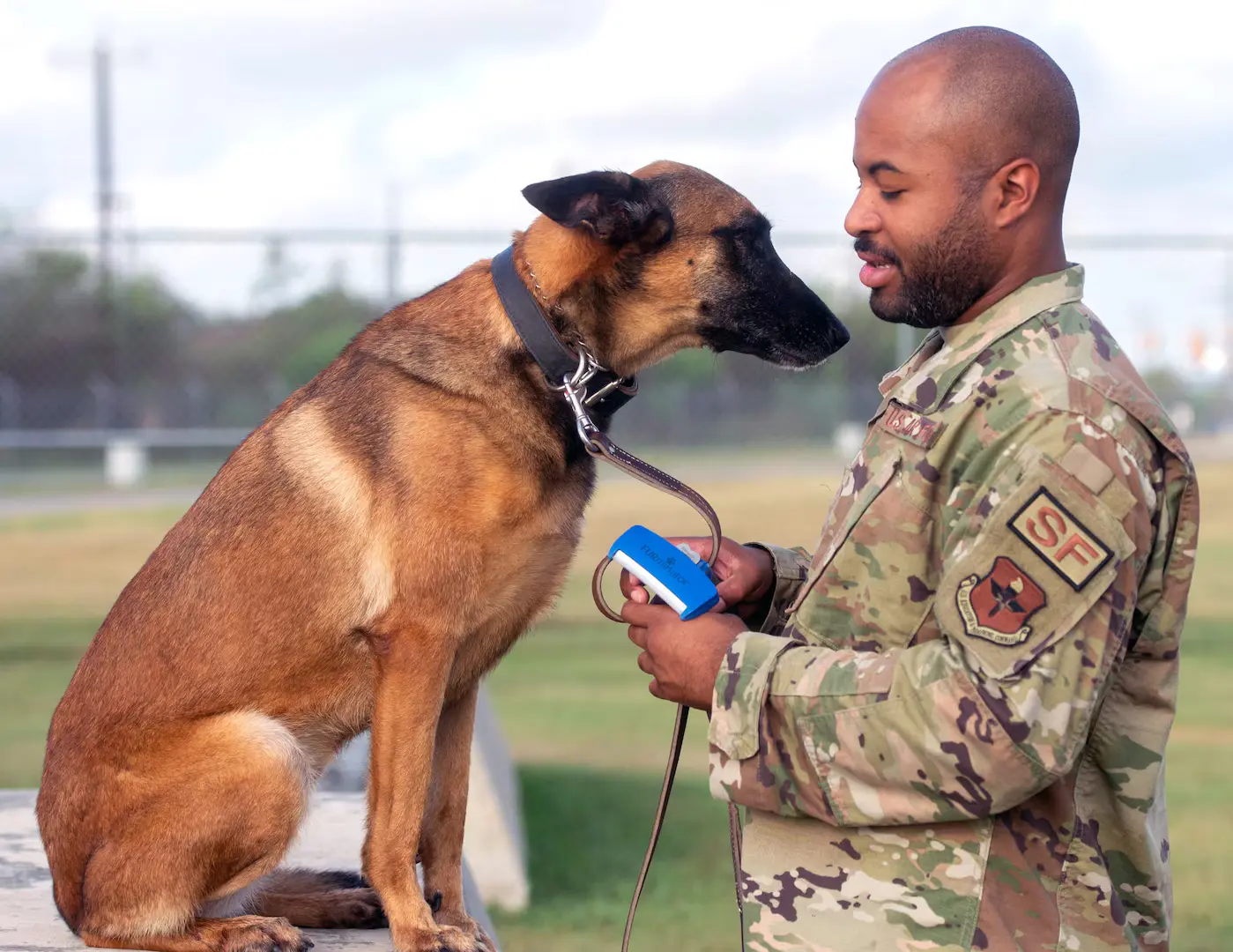
A military working dog is only as effective as its relationship with its human handler. Handlers are taught to read subtle canine body language—a slight tail movement, a posture change, or an abrupt freeze—that indicates a target scent has been acquired. This seamless, non-verbal communication is often the fine line between safety and disaster.
Life-Saving Capabilities in Active Combat Zones
The real measure of a military service dog lies in its performance under fire. In combat environments across the globe, these animals perform miraculous feats that save human lives daily.
A. Mitigating the Threat of Roadside Bombs (IEDs)
In asymmetric warfare, Improvised Explosive Devices represent one of the highest sources of troop casualties. Electronic jammers can block radio-detonated explosives, but they cannot spot buried pressure-plate mines or tripwires hidden beneath dirt tracks. Military dogs walk ahead of infantry patrols, catching scent plumes carried by wind currents. By sitting or lying down quietly to signal a find (known as a passive alert), the dog alerts the unit to halt, preventing devastating ambush explosions.
B. Scouting Dangerous Urban Enclosures
Clearing unknown buildings in hostile urban centers is among the most dangerous missions a soldier can execute. Corner angles and blind doorways hide extreme hazards. Sending a trained canine ahead into a structure allows handlers to receive live video feeds from vest-mounted cameras. If an enemy combatant is waiting in ambush, the dog can disarm or distract the threat, taking the initial risk off human operators.
C. Night Vision and Heightened Auditory Awareness
Human senses are significantly restricted in complete darkness, but a dog’s olfactory system is up to 100,000 times more sensitive than a human’s, and their hearing range is vastly superior. At night, military dogs can hear faint footsteps or weapon charging actions hundreds of yards away, alerting their unit to incoming counter-attacks long before night-vision optical gear detects movement.
D. Psychological Impact on Friendly and Enemy Forces
The presence of a military working dog offers a dual psychological benefit. For friendly troops, having a dog on patrol drastically lowers stress levels and increases confidence in perimeter security. Conversely, for enemy combatants, the psychological fear of a trained, fast-moving patrol dog serves as a powerful non-lethal deterrent, frequently convincing suspects to surrender without a firefight.
Mental Health and Healing: Service Dogs for Veterans
The life-saving mission of military dogs does not end when combat deployments conclude. Thousands of service members return from war zones carrying invisible wounds, particularly Post-Traumatic Stress Disorder (PTSD), traumatic brain injuries (TBI), and debilitating physical disabilities. Specialized Psychiatric Service Dogs step in to provide critical daily intervention.
A. Hypervigilance Interruption and Grounding
Veterans suffering from severe PTSD frequently experience intense hypervigilance, sudden panic attacks, and sensory overload in public settings. Psychiatric service dogs are trained to recognize physiological indicators of distress—such as elevated heart rate, rapid breathing, or subconscious leg shaking. Upon sensing these cues, the dog performs deep pressure therapy (Nudge or Paw techniques) to physically ground the veteran back to the present moment.
B. Perimeter Checking and Spatial Buffering
Entering crowded places or dark rooms can trigger traumatic combat flashbacks for veterans. Service dogs are trained to execute “block” commands, standing perpendicular to the veteran to create a safe physical buffer zone in crowded areas. They can also perform “room checks,” entering a dark home ahead of the veteran and barking or turning on light switches to confirm the environment is secure.
C. Nightmare Interruption and Sleep Support
Severe sleep disturbances and night terrors are widespread symptoms of combat PTSD. Service dogs can detect the physical movement and vocalizations associated with nightmares, gently nudging or licking the veteran to wake them safely from distressing dream states before full panic sets in.
D. Biochemical and Hormonal Regulation
Scientific studies demonstrate that interacting with a service dog significantly increases human oxytocin levels while reducing cortisol (the primary stress hormone). This biochemical shift helps regulate blood pressure, improves sleep quality, and enables veterans to gradually reduce their reliance on prescription psychiatric medications under medical supervision.
Retirement, Adoption, and Post-Service Care
After years of grueling physical exertion and exposure to hostile environments, military working dogs reach an age where they can no longer perform combat duties. Historically, post-service options were limited, but modern legislation and animal welfare advocacy have transformed the retirement landscape for these animal heroes.
A. The Passage of Robby’s Law
Prior to November 2000, many retired military working dogs were euthanized or abandoned because they were legally classified as military equipment rather than living assets. The passage of “Robby’s Law” in the United States fundamentally changed this paradigm, establishing a legal mandate that retired military working dogs be made available for adoption, prioritizing former military handlers, law enforcement agencies, and qualified civilian families.
B. Evaluation and Rehabilitation
Before a military working dog transitions out of service, behavioral specialists conduct thorough evaluations. Dogs that have spent years in high-stress combat roles undergo retraining to ensure they can adjust smoothly to household environments, family dynamics, and peaceful civilian routines.
C. Veterinary Care for Retired Working Dogs
Years of jumping, sprinting, carrying gear, and enduring extreme weather take a heavy toll on a dog’s body. Retired military dogs frequently suffer from hip dysplasia, arthritis, spinal issues, and operational trauma. Nonprofit organizations and specialized medical funds help cover the costly medical treatments, joint supplements, and specialized therapies required to give these retired heroes a comfortable quality of life.
D. Honoring Fallen Canine Warriors
The sacrifice of military dogs is increasingly recognized through official military awards, state memorials, and dedicated military cemeteries. Monuments such as the U.S. Military Working Dog Teams National Monument honor the thousands of canine lives lost in the line of duty, ensuring their bravery is remembered for generations to come.
The Unbreakable Bond and Lasting Legacy
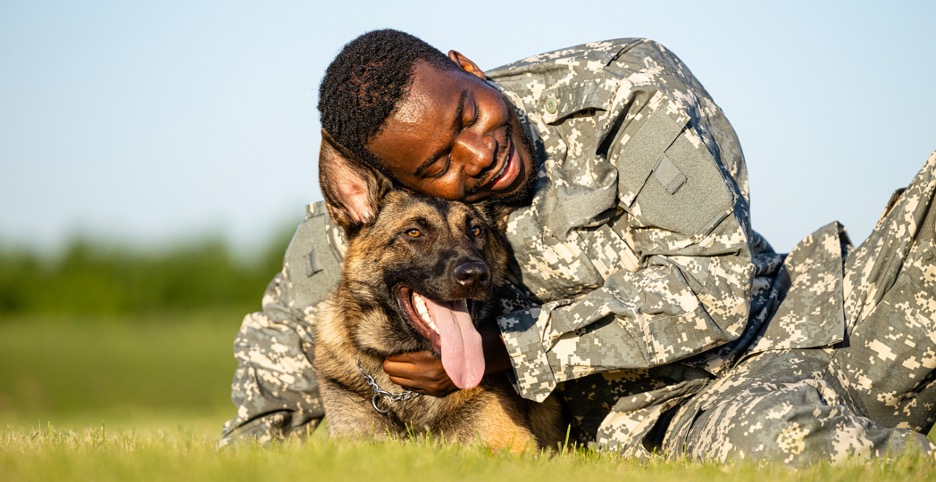
The relationship between a military working dog and its handler transcends standard pet ownership or professional duty. It is a partnership forged in extreme adversity, built on absolute trust, shared hardship, and mutual protection. In the chaotic noise of combat zones, where dangers lurk around every corner, these dogs offer unconditional devotion and unwavering focus.
From ancient battlefields to modern high-tech operational theaters, military dogs have proved time and again that their physical prowess, acute sensory gifts, and mental resilience save lives in ways technology never can. Furthermore, their role in guiding wounded veterans through the dark journey of PTSD recovery shows that their service is double-edged: they shield soldiers from physical harm in war, and they heal their souls when the war is over.
As military tactics continue to adapt to new global challenges, the canine element will remain an essential cornerstone of defense strategy. Investing in their breeding, training, tactical gear, and retirement welfare is not merely a practical military necessity it is a moral obligation to the faithful animals who selflessly give everything to keep human beings safe.